
Z`houg meets Pomodoro Crudo
The Yemenite Pesto, properly grounded

a Jewish Curry Culture Club essay | by Elli Benaiah
Z`houg (also spelled skhug, z`hug, schug, or s’hug) is hard on the English-speaking tongue — but delicious all the same.
The word comes from Judeo-Yemenite Arabic sahawiq (سَحاوِق), derived from the root s-ḥ-q, meaning “to crush” — like the Italian pestare. Before blenders, Yemenites ground chilis, herbs, and garlic between two stones — a marha’ base and wdi roller — yielding a rough, aromatic paste.
In Yemen, it’s called sahawiq and served with everything.
In Israeli slang, it’s simply harif — spicy. Ask for it at a falafel stand and odds are you’ll get z`houg.
Z`houg isn’t just Jewish. Yemenis of all backgrounds eat it — even during Ramadan, despite the burn. It’s the fiery soul of saltah, the national stew, and it crowns jachnun, malawach, lachuch, hilbeh, and more.
But when Yemenite Jews arrived in Israel en masse during Operation Magic Carpet, they brought sahawiq with them — and it spread like wildfire.
From Shabbat tables to sabich stands, z`houg became a national staple.
🌶 Green vs. Red: Know Your Z`hougs
Green Z`houg is the classic: fresh green chilis, loads of cilantro, garlic, cumin, cardamom, salt. Some add parsley or black pepper. Purists skip oil — the herbs and chilis provide all the moisture.
Red Z`houg swaps in red chilis — fresh or dried. Less herbal, more intense. It may include paprika, roasted peppers, even tomato. Spices stay similar, but the flavor shifts toward smoky heat.
Both are punchy, aromatic, and unforgettable.
🛍️ From Homemade to Mass Market
In Israel, supermarket z`houg is everywhere — but don’t be fooled. Once it’s mixed with oil and preservatives, it’s a shadow of the real thing.
I remember an older woman in Ra’anana who sold zhoug from a folding table outside the supermarket on Fridays. If you got there early enough, she’d pack warm saluf or lachuch breads into plastic bags for Shabbat. Her z`houg? Fresh, spicy, green like a forest floor — and always gone before noon.
In the U.S., Trader Joe’s introduced “Z`houg Sauce” in 2018. Blogs raved. Foodies swooned. It helped z`houg go mainstream — from falafel to roast chicken to eggs. But the real deal? You still have to make it fresh.
🔥 Gil Hovav’s Z`houg: A Fusion of Flavor and Family
Z`houg isn’t just a condiment — it’s a declaration. Heat and herb. Memory and migration. All blitzed into a green firestorm that clings to bread, meat, or your heart.
And when it comes from Gil Hovav, it carries something deeper.
Israel is fusion — culinary, cultural, linguistic — and Gil Hovav is living proof.
His great-grandfather, Eliezer Ben-Yehuda, was the Russian-born Ashkenazi visionary who revived modern Hebrew.

His father, Moshe Hovav, of Yemenite descent, was the first Hebrew news broadcaster in the newborn state — a master of enunciation who taught generations how to speak.

Gil inherited that voice — and filled it with flavour.
Born in Jerusalem in 1962, Gil Hovav became one of Israel’s most beloved food personalities — a TV host, food journalist, cookbook author, and culinary ambassador. But more than that, he’s a storyteller — and his zhoug recipe tells a story of spice, soul, and synthesis.
Gil’s father, of Yemenite descent, Moshe Hovav, was the first Hebrew news broadcaster in the newborn state and a master of enunciation who taught generations how to speak modern Hebrew.
Gil inherited that voice — and filled it with flavour.

🧄 Gil Hovav’s Green Z`houg (150g)
A fiery, fragrant, Yemenite-Israeli green sauce. The real stuff. No oil. No compromises.
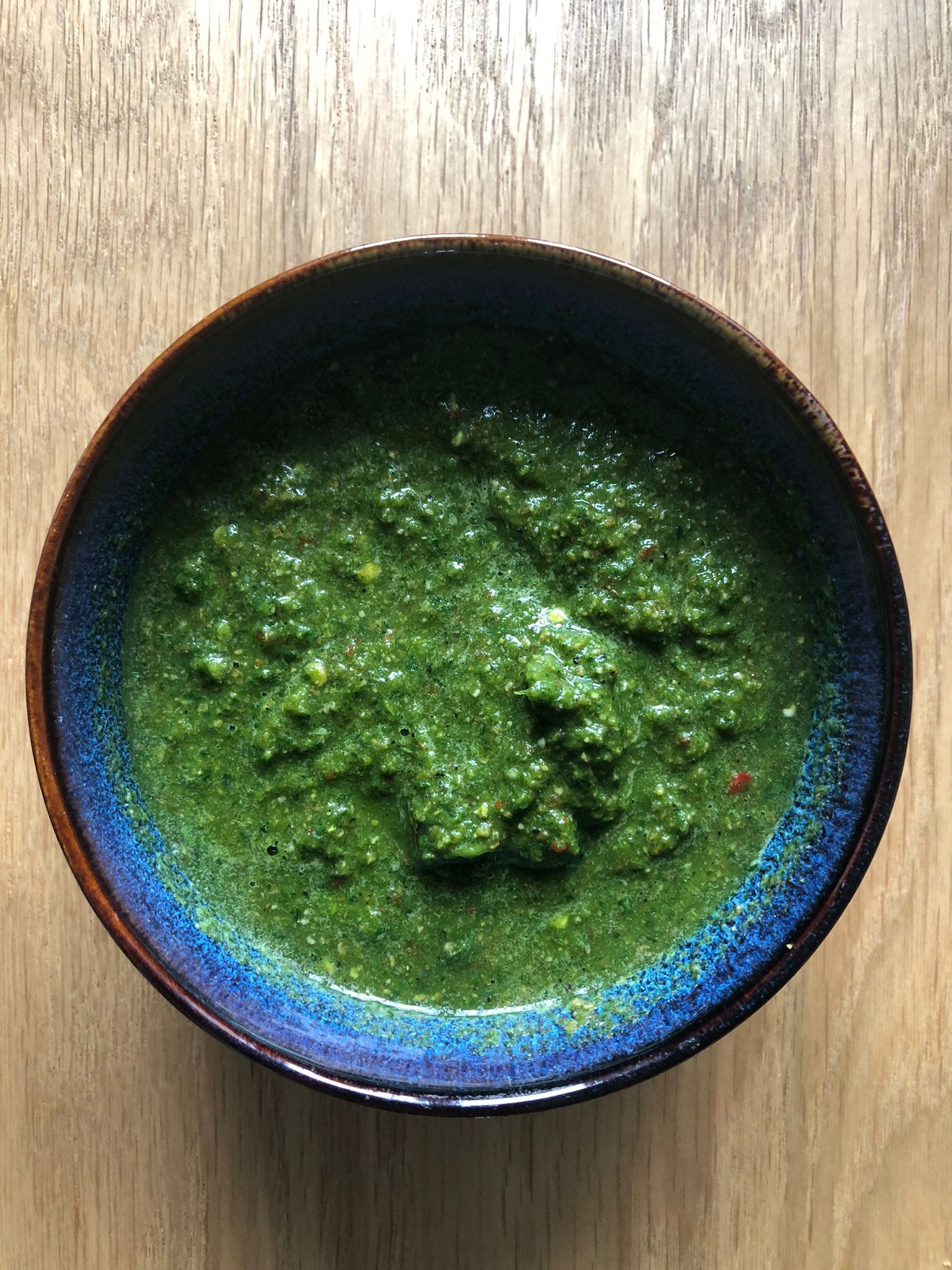
What you need:
• 15 fresh hot green chili peppers
• 1 bunch fresh coriander (cilantro)
• Cloves from 1 whole head of garlic
• 1 tbsp ground cumin
• 1 tsp ground cardamom
• 1 tbsp salt
• 1 tsp ground black pepper
How to make it:
Place all ingredients in a food processor fitted with a steel blade. Blitz into a coarse green paste. Store in a clean jar in the fridge. Keeps for a week — if you can resist.
👉spice up your life with a PDF recipe card
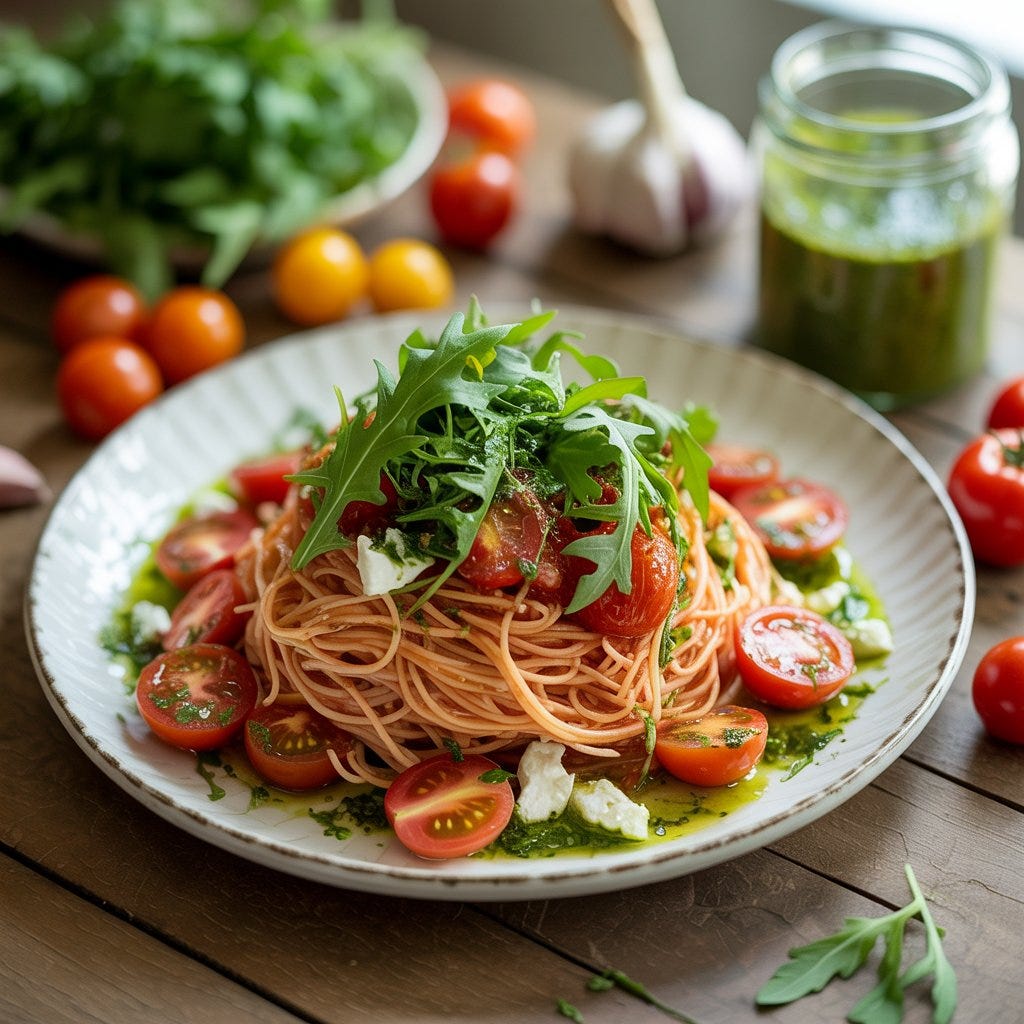
🍝 Bonus Recipe: Pomodoro Crudo Pasta with Z`houg
A summer pasta — no stove, just sun-ripe cherry tomatoes, garlic, olive oil, and a hit of green fire. The right way to treat z`houg. Cooking it destroys its wonderful herbaceousness.
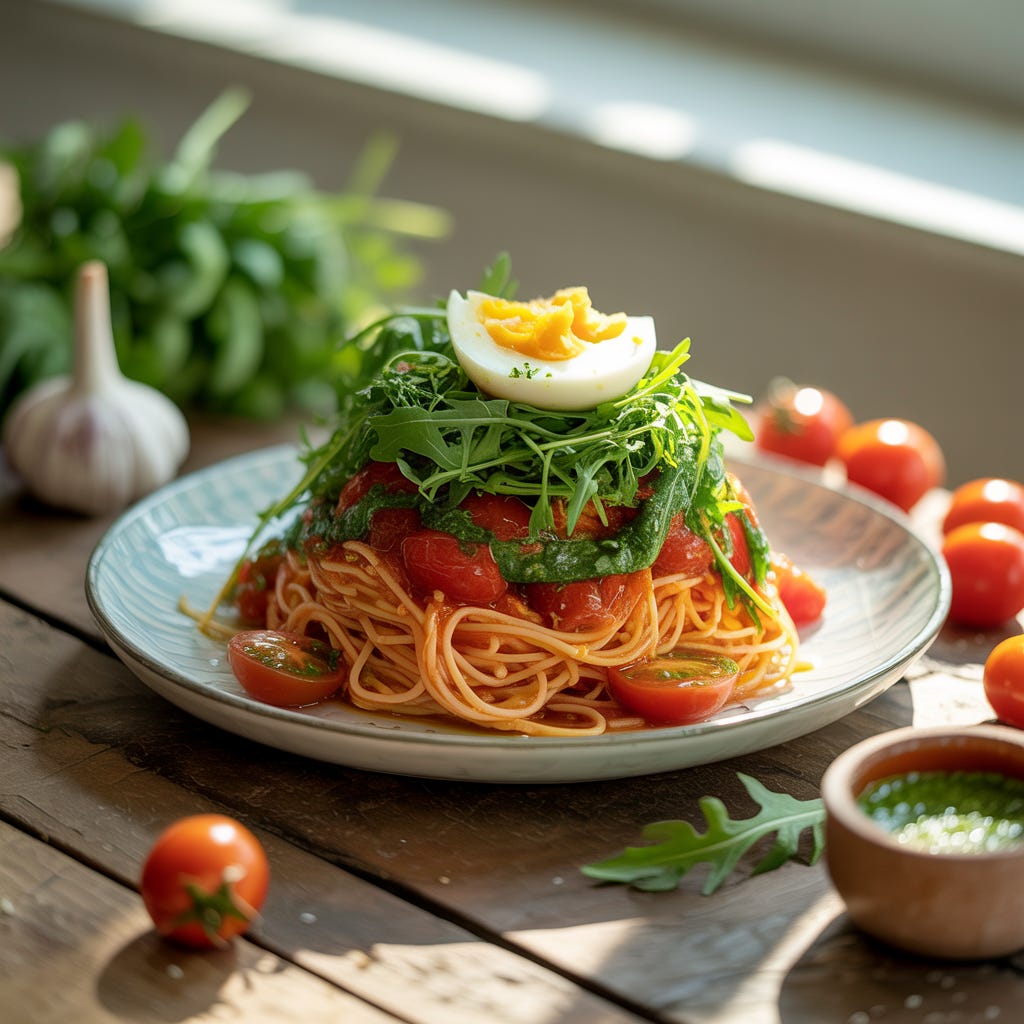
It reminds of the way its eaten in Israel, mixed into freshly grated tomato, with Mellawach (a sort of paratha), alongside a hard-boiled egg.
You’ll need:
• 2 cups halved cherry tomatoes
• 2 garlic cloves, grated
• 3 tbsp olive oil
• 1.5 tsp Salt, 0.5 freshly ground pepper, more to taste
• 1 tbsp fresh z`houg, more to taste
• A handful of rucola (arugula)
• 400 gr. angel hair pasta, cooked al dente
• Optional: Feta or goat cheese, or grated hard boiled egg
How to make:
In a large bowl, mix tomatoes, garlic, oil, and salt. Let sit 20–30 min.
Toss hot pasta directly into the bowl.
Add the tomato mix on top, toss
Add a rucola and cheese, toss again.
Drizzle the z`houg atop the pasta dish — just before serving, to preserve freshness.
Decorate with more rucola and cheese, or grated hard boiled egg
This is pomodoro crudo meets Tel Aviv spice market.
A pasta salad that sings in Arabic and Hebrew.
✡️ Final Thoughts: Add Heat, Add History
Z`houg, like Gil Hovav himself, is more than the sum of its parts. It’s not just chili and coriander. It’s voice and memory. Ashkenazi and Yemenite. Blended, pounded, spoken — and spooned onto falafel.
So the next time you taste z`houg — homemade, raw, vibrantly green — remember where it came from.
Remember the woman at the market.
The stone grinders of Yemen.
The language revived.
The radio voice that taught a nation to speak.
And remember: a little spoonful goes a long way.
Lovely, would eat this everyday.
Thought z’houg and harif were distinct? You had to be a real man to eat the former, while harif was just a bit less potent (if I recall correctly from the old central bus station in Tel Aviv).