
The Golden Reflex
How Turmeric Rewrote the Jewish Baghdadi Kitchen in India

Turmeric does not travel alone. It travels through hands, kitchens, rivers, and memory.
One of the hallmark spices that defines the difference between the older Near Eastern Baghdadi kitchen and what it later became in India is turmeric. Turmeric may be one of the clearest clues that a kitchen has crossed a border, not because the spice was unknown in the Near East, but because its role changed so profoundly once the Baghdadi Jews settled in India.
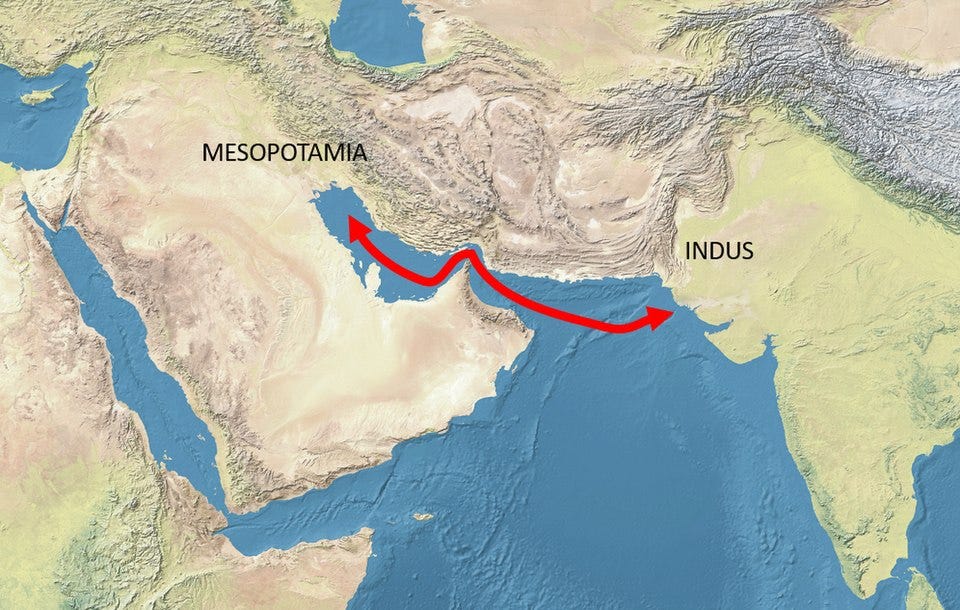
Long before empires, passports, or nation-states, the waters of the Persian Gulf linked Mesopotamia to the Indus Valley through systems of trade, migration, and exchange that carried not only merchants and goods, but flavours, habits, and memory. (Courtesy Wikipedia)
Trade between Mesopotamia and the Indian subcontinent is ancient, rooted in the maritime systems that linked the Persian Gulf to the Indus Valley thousands of years before people understood nations in the modern sense. The same sea routes that carried merchants, carved ivory, pearls, timber, textiles, and precious stones also carried spices, perfumes, dyes, and culinary habits. Mesopotamian cuneiform archives even preserve traces of permanent “Meluhha” merchant communities living inside Mesopotamian cities, intermediaries between worlds joined together by commerce and water long before the arrival of empires or passports.
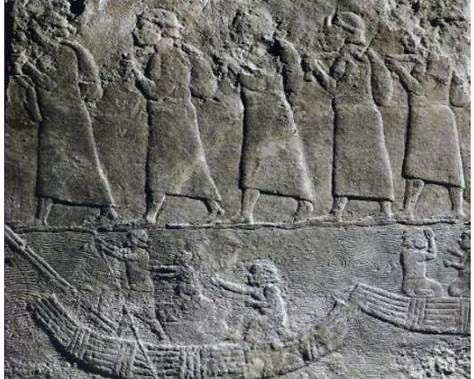
By the Rivers of Babylon: An ancient testimony to the restlessness of Mesopotamia. Long before the diaspora reached the Hooghly, these same waters carried the first ‘guest’ arrival of Eastern spices. Reproduced from “Exploring the Mesopotamian Trade (c.6000–539 BCE): Types, Organization, and Expansion” (2023), Fig. 1.
Turmeric - like other spices - travelled those same routes.
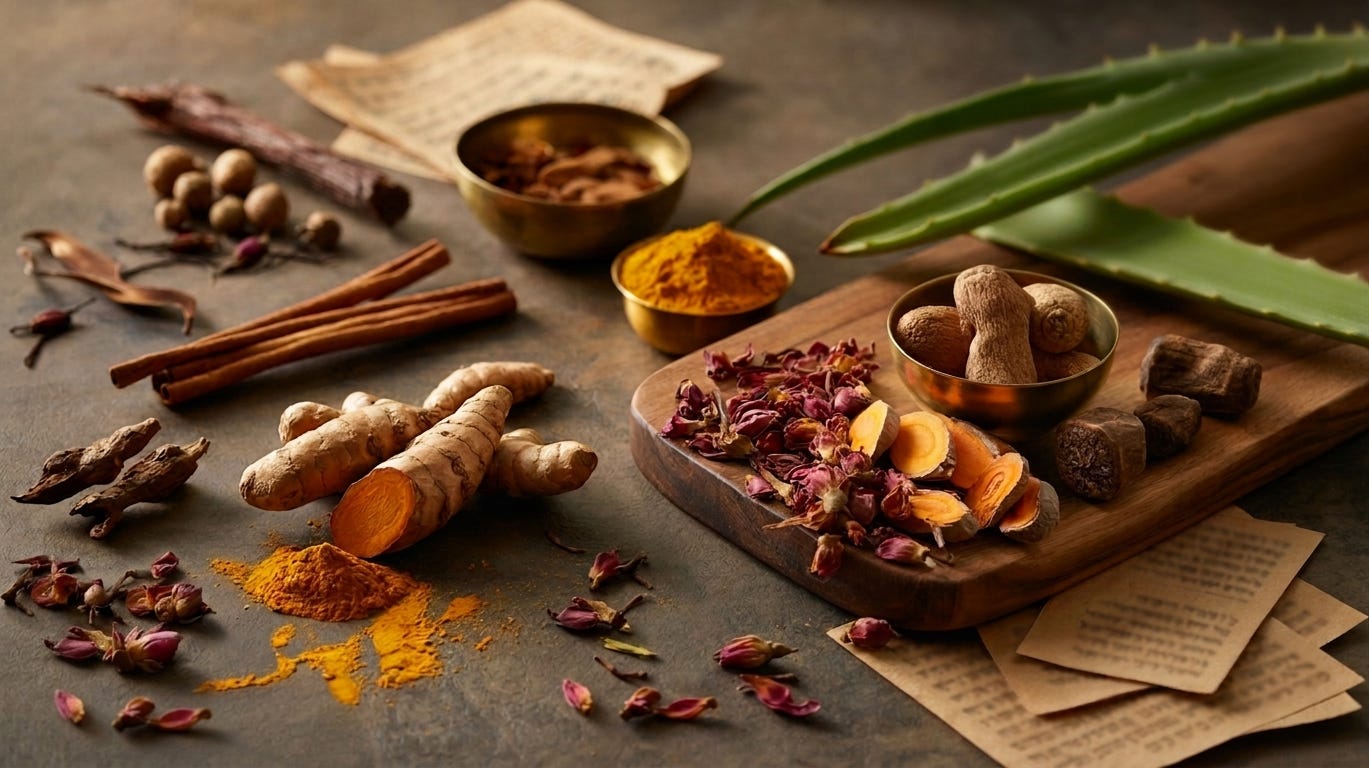
Turmeric as root: A botanical, linguistic, and diasporic journey from the ancient Near East to the Indian diaspora.
The British imperial routes that later linked Basra, Bombay, Aden, Rangoon, and Calcutta did not invent these connections so much as reactivate older ones. Long before steamships and passports, Mesopotamia and India were already tied together by maritime trade across the Indian Ocean. Yet in the Baghdadi kitchens of old, including the Jewish kitchen, turmeric did not dominate the structure of cooking in the way it later came to in India. Apparently, a spice can exist within a cuisine without defining it.
In the kitchens of Baghdad and Basra, the food leaned more heavily on cinnamon, cardamom, cumin, coriander seed, black pepper, baharat (a spice mix that actually contains some turmeric), dried herbs, and the sharp acidity of lemon and dried lime. The flavours were earthy, aromatic, and often dark in tone, with spices layered carefully into the dish rather than announcing themselves visually. Turmeric existed there under related Semitic names such as Arabic kurkum, linguistically connected to the biblical Hebrew karkom.
In the world of the Song of Songs, eastern spices were already markers of wealth, sensuality, and distance, but not yet the organising grammar of the everyday kitchen.
נֵרְדּ וְכַרְכֹּם, קָנֶה וְקִנָּמוֹן, עִם כָּל-עֲצֵי לְבוֹנָה; מֹר וַאֲהָלוֹת, עִם כָּל-רָאשֵׁי בְשָׂמִים.
“Spikenard and saffron (karkom), calamus and cinnamon, with all trees of frankincense; myrrh and aloes, with all the chief spices.”
— Song of Songs
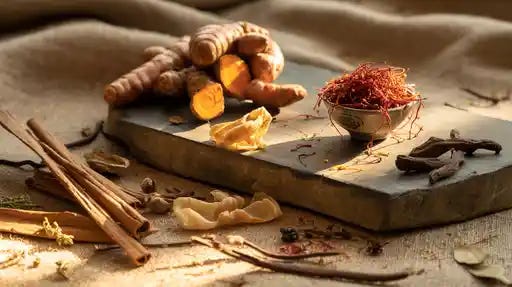
Root, resin, bark, and thread: the fragrant world of karkom before turmeric became the colour of the Baghdadi-Indian kitchen.
In India, turmeric stopped being an accent and became a foundation. It was not simply another spice among many. India did not merely consume it; it cultivated entire agricultural worlds around it, from the turmeric belts of Tamil Nadu to the great spice markets that supplied the subcontinent and beyond. Turmeric - haldi, rooted in the Sanskrit haridra - belonged simultaneously to the culinary, medicinal, domestic, and ritual worlds. It occupied the kitchen, the body, the ritual sphere, and the household all at once.
This is where the Baghdadi Jewish kitchen in India begins to change from the 19th century onwards, and this change was visible long before it was tasted. Many Baghdadi-Indian dishes - aloo makalla, mahmoosa, kichree, khatta, fish curries, and yellow rice dishes - began to feature haldi as an automatic reflex. Cuisines rarely transform through dramatic reinvention; they change gradually through repetition, through habits repeated across generations.
Turmeric became one of those reflexes. It entered the pan first without thought, eventually transforming the colour and feel of the entire kitchen.
The transformation was eased by another historical reality that now feels strangely forgotten. For a brief period under the British Empire, the worlds of Basra, Bombay, Aden, Rangoon, and Calcutta were not imagined as entirely separate civilizational spheres. Merchants moved through overlapping commercial and administrative routes tied together by the Indian Ocean, carrying Indian passports and spending Indian rupees as they travelled between Gulf ports and Asian cities. Yet the imperial routes largely reactivated something far older. Mesopotamia and India had already been connected through maritime trade for millennia. The routes changed, but the movement itself did not.
In Calcutta, the Baghdadi kitchen adapted to a wetter, more tropical world, and turmeric moved from the margins of the spice box toward the centre of the pot. Unlike some imported ingredients that remain foreign additions, turmeric integrated almost perfectly into the logic of the Baghdadi Jewish kitchen in India. Jewish meat cooking relied heavily on oil rather than butter or cream, and turmeric responds especially well to oil-based cooking. When heated in oil, its bitterness softens, its colour deepens, and its earthy warmth spreads gently through the dish.
That made it useful rather than merely exotic. Over time, turmeric became so naturalized within the Baghdadi-Indian kitchen that certain dishes now feel incomplete without it. Turmeric thus stopped being an accent and became a foundation.
The colour itself became part of memory.
To this day, food without turmeric still feels strangely unfinished to me, as though the kitchen itself has not fully awakened. White rice was reserved for mundane weekdays; yellow pulao was for the holy.
I remember this history not through maps, but through Friday afternoons in my mother’s kitchen. The scent of turmeric would slowly rise from the pot as the potatoes simmered toward the Sabbath. There was no written recipe, only repetition of what my grandmother had done before her: water stained yellow, oil heating slowly, the familiar glow that settled over the kitchen before evening arrived.
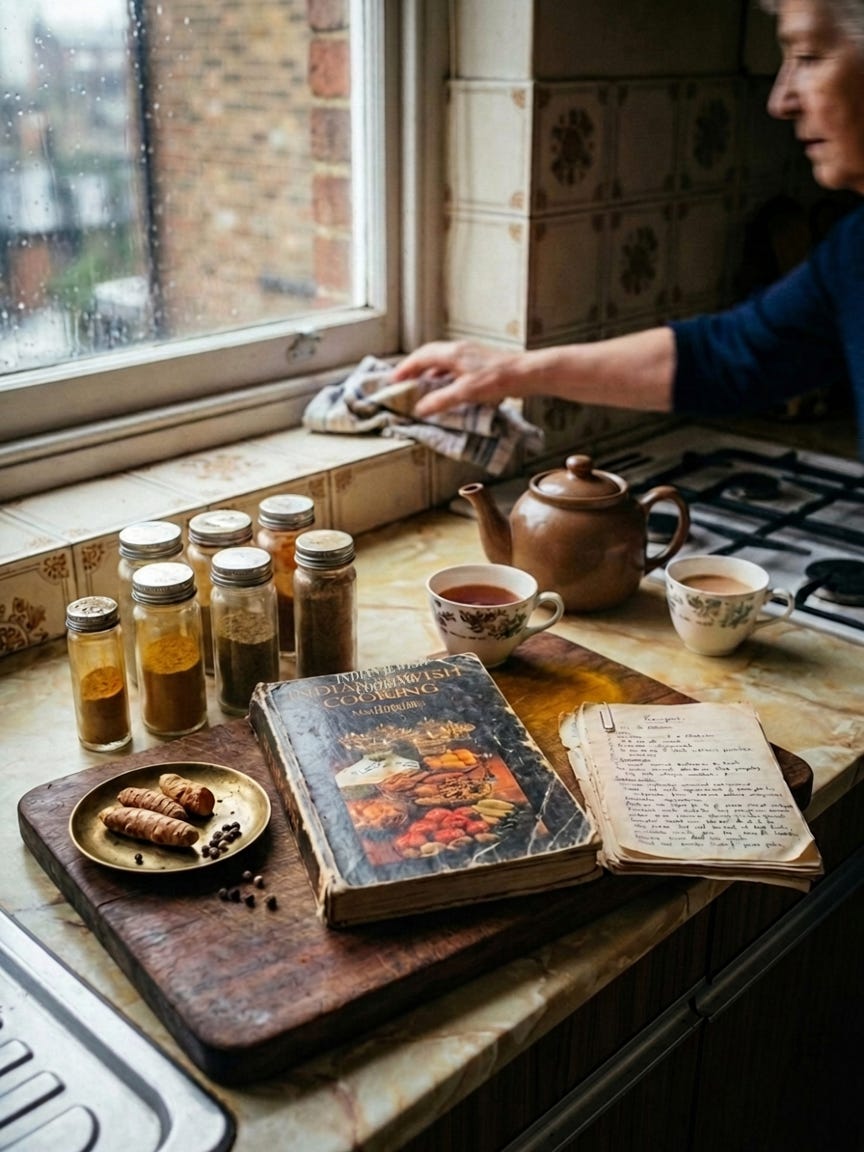
In Baghdadi-Indian Jewish homes, turmeric ceased to be an occasional spice and became part of the visual and ritual grammar of the kitchen itself. Covers such as Mavis Hyman’s Indian-Jewish Cooking preserve that transformation in plain sight: aloo makalla, yellow rice, mahashas, and other Shabbat foods gathered around the Jewish table in unmistakably Indian colour.
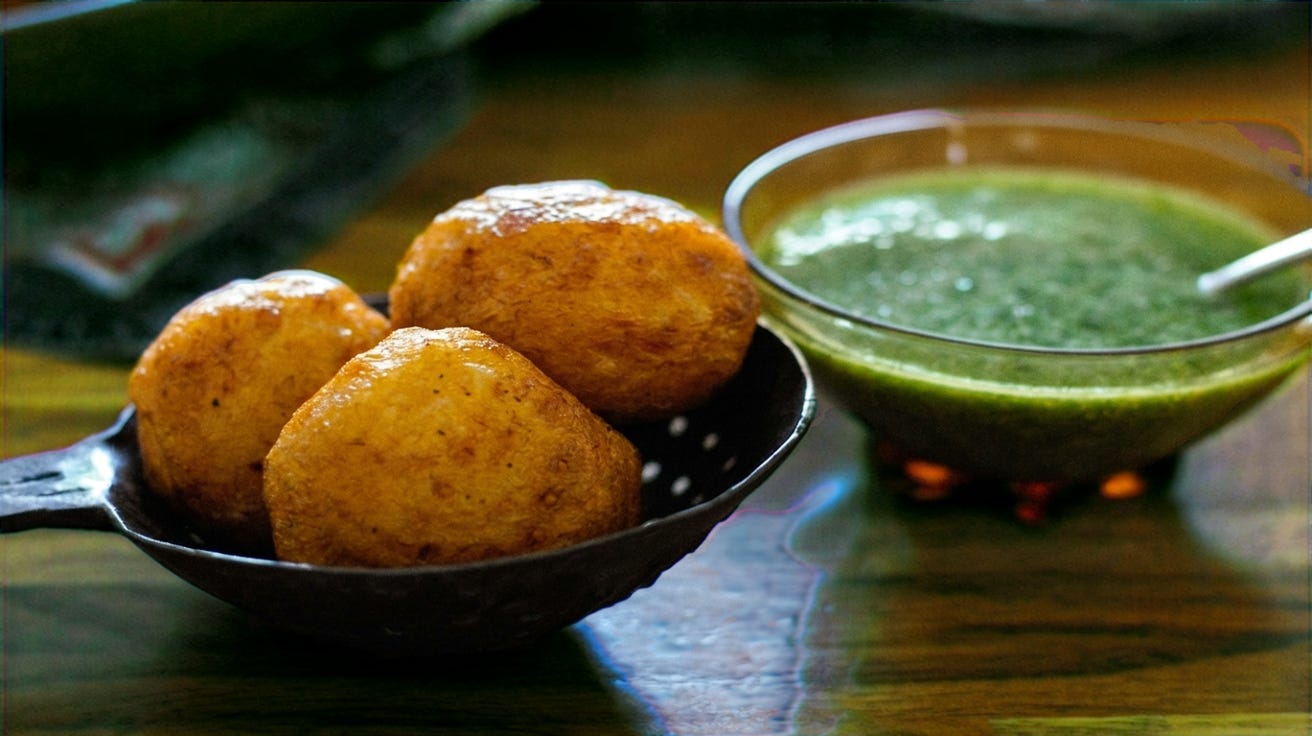
Perhaps no dish demonstrates this transformation more clearly than Aloo Makalla, the iconic Baghdadi-Jewish fried potato. Whole peeled potatoes are first parboiled in water deeply stained with turmeric and a pinch of baking powder. The turmeric penetrates the starch itself, turning the potato inwardly gold. Once dried, the potatoes are lowered into deep oil, and the turmeric blooms in the heat. By the time the potatoes reach the Sabbath table, they are soft as clouds within and burnished gold outside. Here, the Arabic makalla - fried - and the Hindi aloo - potato - meet in a single act of repetition that quietly reveals the merging of two culinary worlds.
The journey of turmeric eventually loops back toward Iraq itself. Few dishes reveal this more beautifully than Masgouf, the famous carp of the Tigris. The technique itself is ancient: a fish split open and cooked slowly against the heat of a wood fire. Yet modern Iraqi masgouf often carries another layer shaped by the return of Indian spice routes. As the carp roasts, it is basted with a slurry of turmeric, tamarind, and oil until the spice darkens into a sharp orange crust. In that moment, ancient Mesopotamia meets the Indian Ocean.
This feedback loop is most visible in Amba.
Today considered deeply Iraqi, this sharp, yellow pickled mango sauce was actually part of the movement between Iraq and India. In diaspora kitchens, colour often survives adaptation long after exact measurements, techniques, or ingredients begin to shift. Baghdadi Jews living in Bombay carried mango pickle traditions back to the Iraqi world, where haldi gave the condiment its unmistakable character. What began as an imported adaptation eventually became naturalized so completely that it now feels inseparable from Iraqi street food itself. The good news travelled back home in amba, instantly recognizable by its bright yellow colour.
Once turmeric enters the Indian Ocean world, even the plant itself begins to fragment into different culinary functions. In Southeast Asian cuisines, the plant is not limited to the root. The leaves, known as daun kunyit, become important aromatic tools. In dishes such as the Indonesian rendang, finely sliced turmeric leaves are added toward the end of cooking, releasing a fragrance that feels green, citrusy, and faintly floral. Where the root builds the body of the dish, the leaf shapes its atmosphere.
In Kerala, turmeric leaves - manjal ila - are used as fragrant wrappers for sweets such as ela ada, where rice dough filled with coconut and jaggery is folded into the leaf and steamed. The leaf is not eaten; it perfumes the sweet through contact and steam. This reflects a broader culinary principle: flavour can be transmitted indirectly. Not everything needs to be incorporated directly; sometimes aroma hovers and wraps around the dish rather than inside it.
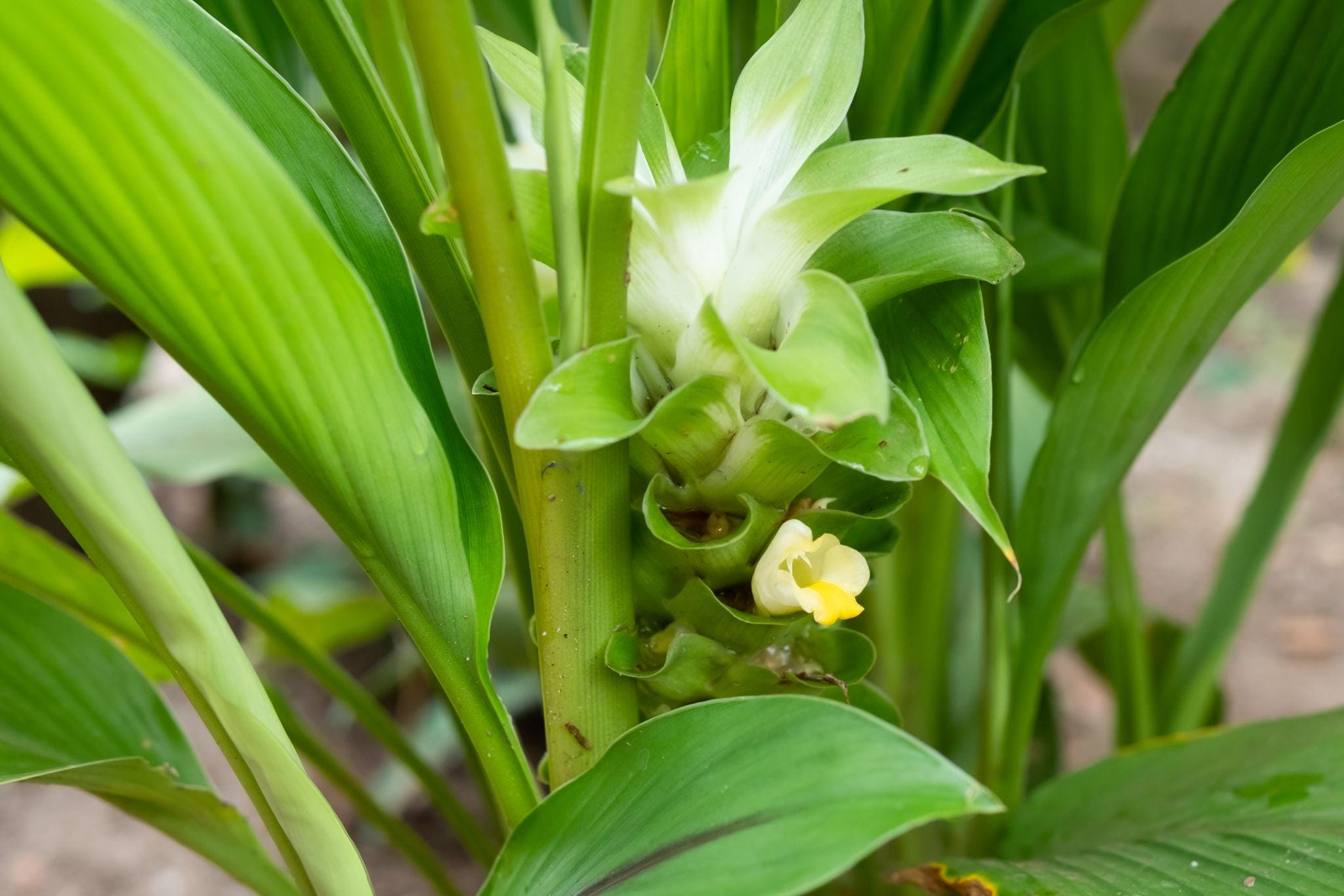
The turmeric world of Kerala is inseparable from water, monsoon, and the tropical ecology of the Malabar coast. The leaf perfumes through steam and contact rather than dominating the structure of the dish.
Turmeric is never simply flavour. It belongs to larger systems linking agriculture, labour, trade, ecology, migration, and memory. Once reconnected to them, spices recover geography and story. Ingredients migrate. But they do so by finding their place within the logic of the people who carry them.
Ultimately, this golden thread is more than a metaphor; it is biological. Curcuma longa is a triploid sterile plant that produces no seeds and cannot spread by the wind or the wild. Every turmeric plant in the world exists only because a human hand dug up a rhizome and replanted it elsewhere. It is the ultimate living archive of human movement.
Perhaps instinctively, a few months ago I planted my own turmeric rhizome, hoping it will grow my own daun kunyit. I pray.
Turmeric migrated as a root, a powder, and a leaf because it became the golden reflex of a community in motion - a community that carried its birthplace in its kitchen, repeating a pattern of connectivity that has linked the Indus to the Euphrates for over four thousand years. The journey of turmeric eventually loops back toward Iraq itself, proving that the currents of the Hooghly and the Tigris have always been part of the same restless sea.

The Tigris at twilight. For millennia, these waters served as the primary artery between the Mediterranean and the Indian Ocean, carrying the first ‘guest’ arrival of eastern spices to the gates of Baghdad. (Courtesy Xinhua News).
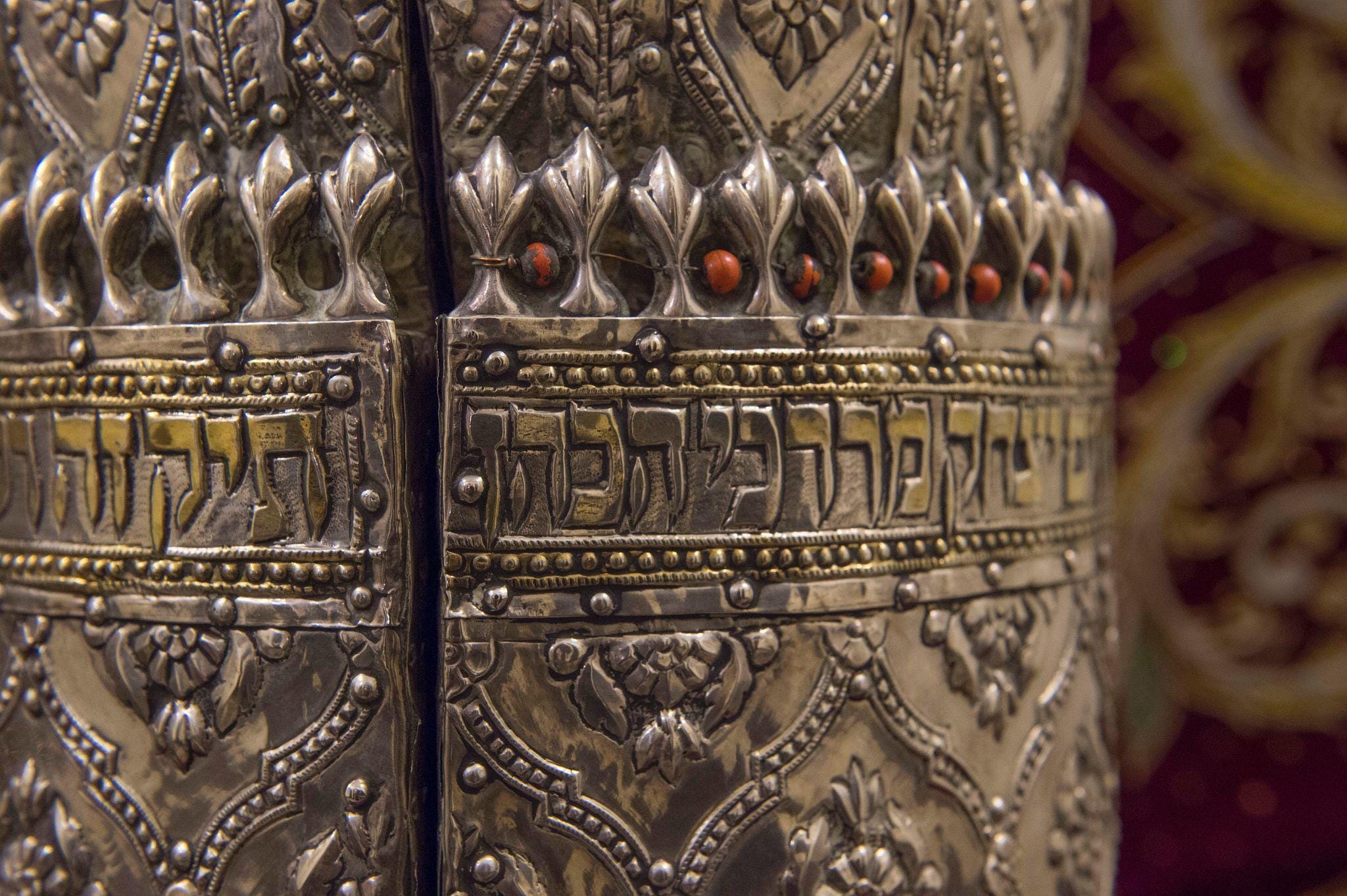
A diaspora does not migrate through recipes alone. It migrates through kitchens, prayer halls, merchant houses, and repetition.
Modern Iraqi masgouf reveals how thoroughly these Indian Ocean spice routes eventually flowed back into the heart of Mesopotamia. The technique remains ancient: a carp split open and roasted beside an open wood fire. But as the fat hisses into the embers, the fish is basted with a vibrant slurry of turmeric and tamarind -flavors that traveled from the markets of Bengal back to the river-banks of Baghdad.

The silt-heavy waters of the Hooghly and part of Calcutta’s east bank, 1945. Photo by Clyde Waddell. By the rivers of Babylon, we sat and remembered - but on the banks of the Hooghly, we cooked. This ferry crossing represents the restless pulse of a city built by the water, where the Baghdadi soul finally found its golden frequency. It was here, in the kitchens of Calcutta, that the Baghdadi Jewish identity took on its permanent golden hue (Courtesy Wikipedia commons).
The Diaspora Cookbook: Reconnecting the Chain
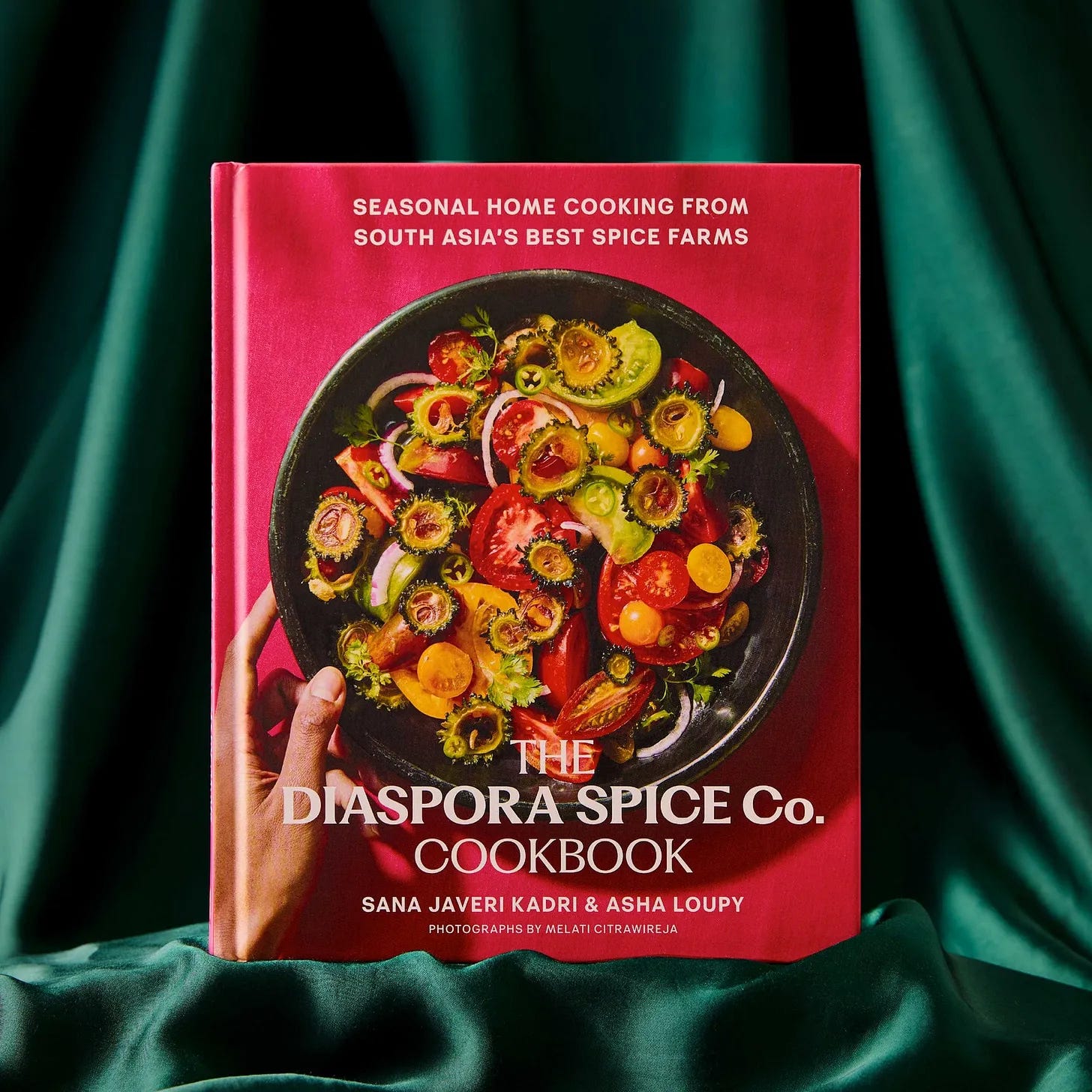
For much of the twentieth century, diaspora cookbooks often functioned as acts of preservation. Communities in motion often wrote recipes down out of fear that the kitchen itself might disappear. Measurements replaced instinct. Memory was compressed into measurements.
But a newer generation of diaspora food writing has begun to move in another direction. Books such as The Diaspora Co. Cookbook are not merely collections of recipes. They attempt to reconnect spices to the agricultural, linguistic, ecological, and migratory systems that produced them.
Turmeric is no longer treated as an anonymous yellow powder sitting in a supermarket jar, but as part of a living chain linking farmers, monsoon climates, trade routes, kitchens, and memory.
In many ways, the Baghdadi-Indian kitchen belongs naturally within that same conversation. The recipes that follow are therefore not presented simply as dishes, but as three different stages in the journey of turmeric across the Indian Ocean world: the adaptation, the transformation, and the eventual return of turmeric to the banks of the Tigris.
Three Journeys in Turmeric
🇮🇳 The Foundation: Aloo Makalla (Jumping Potatoes)
Style: Baghdadi-Jewish (Kolkata/Mumbai)
To see how the “Jumping Potato” is perfected in the modern kitchen, I’ve shared my family’s method below - a process measured more in patience than in grams.
Ingredients
2 kg yellow waxy potatoes (peeled)
2 generous pinches of ground turmeric
1 tsp baking powder
Salt to taste
Neutral oil for deep frying
2 litre water
The Method: Aloo Makalla
The Prep: Scrub and peel waxy yellow potatoes. Parboil them in water heavy with turmeric and a teaspoon of baking powder. The baking powder is the secret - it roughens the starch, creating the microscopic “cliffs” that will later become the glass-like crust.
The Long Wait: Drain and dry them completely. Place them in a heavy-bottomed pot with a generous amount of oil. Let them sizzle over low heat for an hour. Add a few splashes of hot water here and there - not to steam them, but to keep the spices from catching while the insides soften to a cloud.
The Crisp: Twenty minutes before the Shabbat candles are lit, crank the heat. This is the transformation. Don’t stir. Don’t blink. Let the turmeric bloom in the high heat until the potatoes turn a deep, toasted gold.
Turn them carefully, brown both sides, and serve crusty, while the oil is still singing. And if one jumps off your fork - laugh. It’s tradition.
🌴 The Coastal Current: Kerala Meen Moilee
Inspired by the turmeric-centred philosophy of The Diaspora Co. Cookbook
Style: Kerala Coastal (Turmeric in Coconut Oil)
Yield: Serves 4
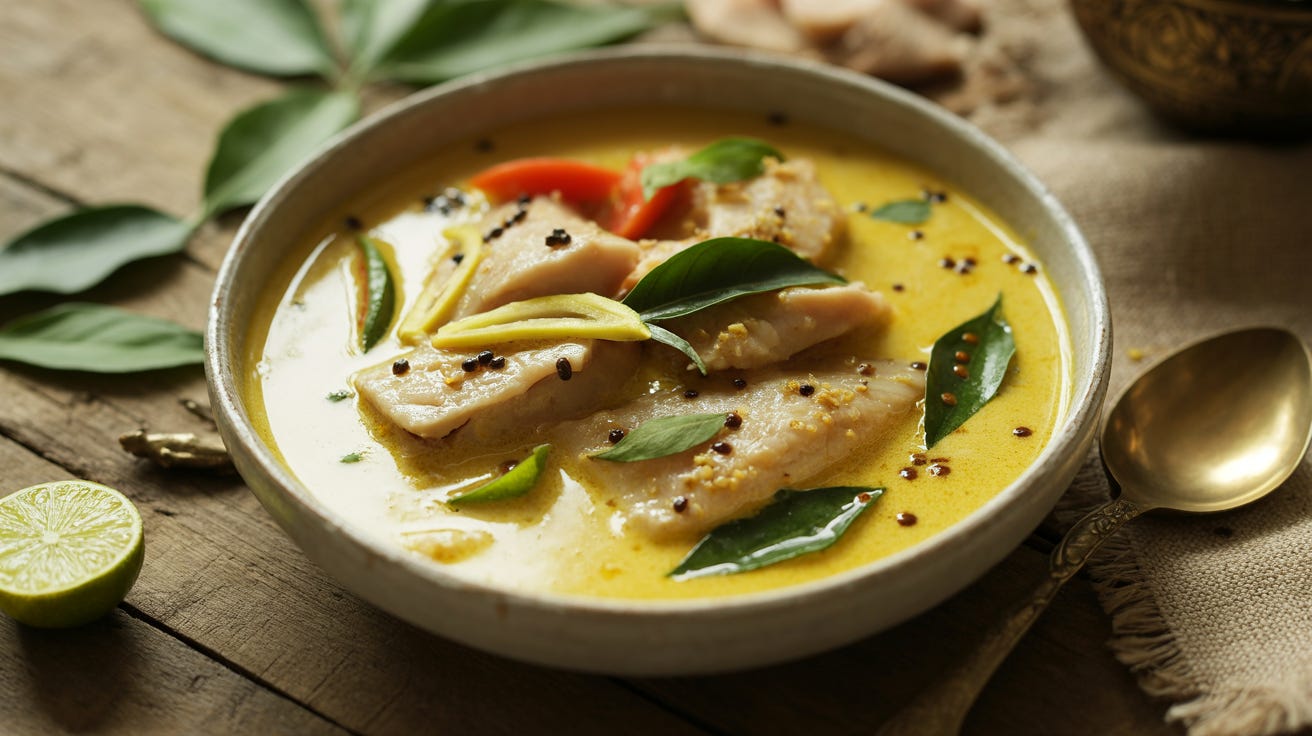
The “Aromatic Ghost.” A study in restraint, where flavor is transmitted indirectly through the medium of steam.
Ingredients
700 g firm white fish (halibut, cod, snapper, or sea bass)
1 tsp ground turmeric
1 can coconut milk
2 shallots, thinly sliced
3 garlic cloves, finely chopped
1-inch piece ginger, julienned
1–2 green chilies, slit lengthwise
1 tsp black mustard seeds
10–12 fresh curry leaves
3 tbsp coconut oil
Juice of ½ lemon
Salt to taste
Method
Rub the fish gently with turmeric, salt, and lemon juice and set aside briefly.
Heat the coconut oil in a wide pan over medium heat. Add the mustard seeds and allow them to crackle. Add the curry leaves, shallots, garlic, ginger, and green chilies, cooking gently until fragrant and softened but not browned.
Pour in the coconut milk and bring to a soft simmer. Nestle the fish into the sauce and cook gently until the flesh is just tender and flakes easily.
The turmeric does not dominate the dish. Instead, it stains the coconut broth pale gold while binding together spice, fat, and sea into a softer coastal logic of flavour.
👉 Get your printable PDF recipe for Kerala Meen Moilee here
🇮🇶 The Return: Baghdadi Masgouf
Style: Near Eastern (The Golden Baste)
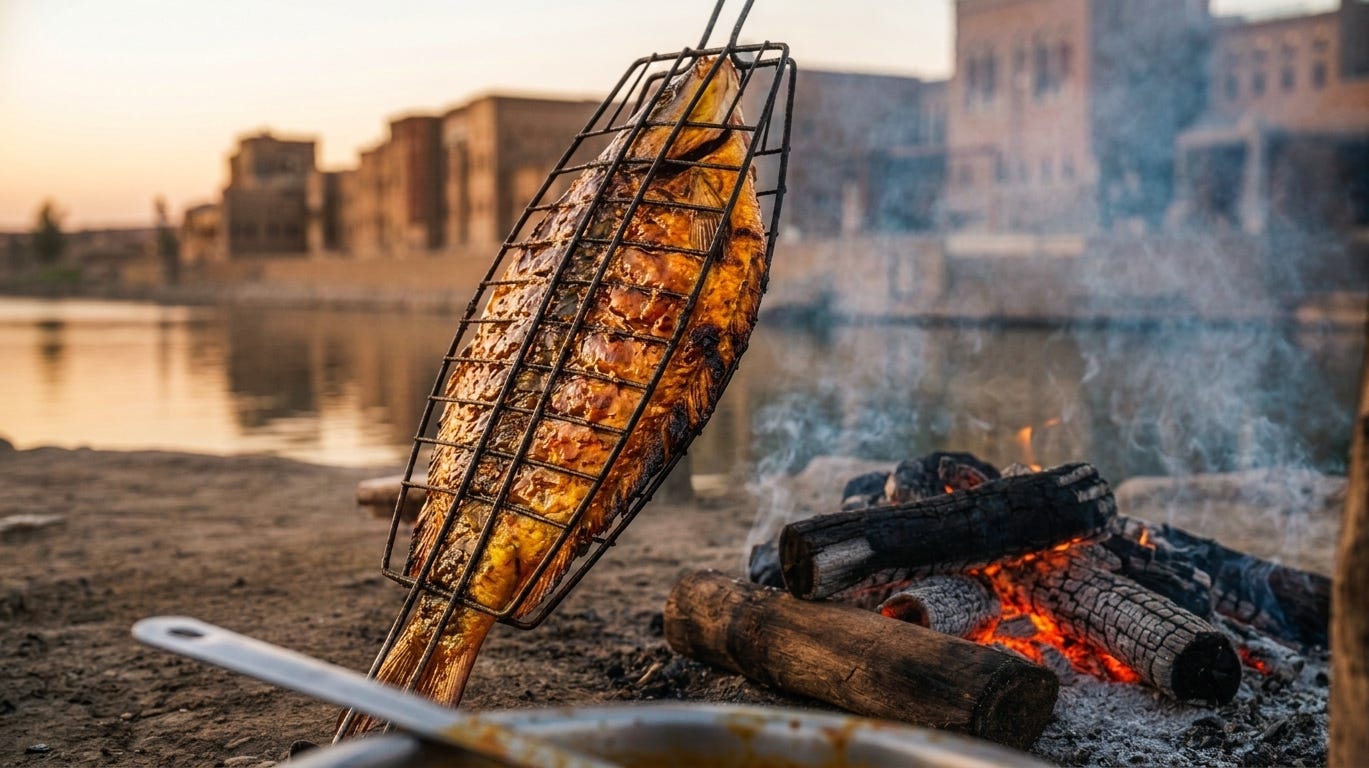
The Tigris at Baghdad. Once a gateway for spices arriving from the East, where turmeric first appeared as a ‘guest’ in the Mesopotamian pot. Modern Iraqi masgouf reveals how thoroughly these Indian Ocean spice routes eventually flowed back into the heart of Mesopotamia.
Style: Near Eastern
Butterfly a large freshwater carp and lay it flat.
Whisk 2 tbsp ground turmeric, 3 tbsp tamarind paste, minced garlic, and olive oil into a thick slurry. Generously coat the flesh side of the fish.
Roast next to an open fire or in a hot oven (220°C).
As the fat renders, the turmeric blooms into a sharp orange crust, cutting through the richness of the fish and marking the return of the Indian spice reflex to the banks of the Tigris.
Ingredients
1 large freshwater carp (or sea bass), butterflied
Baste: 2 tbsp ground turmeric, 3 tbsp tamarind paste, garlic, olive oil, salt
Method
Butterfly the fish and lay it flat. Whisk the turmeric into the tamarind and oil to create a thick slurry. Generously coat the flesh side. Roast next to an open fire or in a hot oven (220°C). As the fat renders, the turmeric blooms into a sharp orange crust, cutting through the richness of the fish and reclaiming the ancient Mesopotamian tradition with a golden Indian reflex.
In the glow of that fire, the distinction between ‘here’ and ‘there’ dissolves. The golden stain on the fish is a silent testament to a diaspora that never truly left one river for another, but simply learned to live in the space between the Tigris and the Hooghly.
Turmeric migrated as a root, a powder, and a leaf because it became the golden reflex of a community in motion - a community that carried its birthplace in its kitchen. In planting my own rhizome today, I realized that the project of Beyond Babylon is not just a historical inquiry. It is the slow, muddy work of discovering roots.
Somewhere between the dry riverbanks of Mesopotamia and the humid air of Bengal, the Jewish Baghdadi kitchen learned to cook in yellow.
Postscript
When I opened Numnum Delicious, my kosher restaurant in Basel, I was not prepared for the ‘turmeric anxiety’ I would encounter. In a culture obsessed with clinical cleanliness, turmeric was not viewed as a spice, but as a stain - invasive, permanent, and culturally ‘excessive.’
People tolerated saffron, perhaps because it arrived wrapped in the clinical prestige of European refinement. But turmeric was seen as a mark that wouldn’t wash off.
For a long time, Basel made me tentative. I found myself cooking with a muted palette, much more with saffron, but all the time feeling I was trying to avoid the ‘stain’ of my own heritage.
But this is my outing. This is me coming out of the turmeric closet and proudly declaring the depth of that stain. I have realized that what my neighbors saw as a blemish was actually a Sephardi rhizome -a root that is stubborn, vibrant, and impossible to erase. Like turmeric itself, diasporic identities do not spread by seed carried on the wind; they survive because someone keeps digging them up and replanting them.
I am no longer interested in being ‘unstained.’ I am interested in discovering roots.
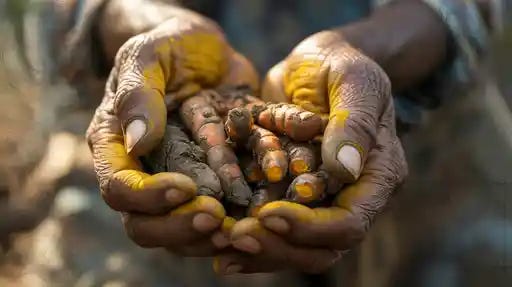
Curcuma longa: Discovering roots that cannot spread without a human hand to replant them.
If this essay resonated with you, I’m grateful you’ve read this far.
This piece was inspired by a series of conversations about the ‘unseen’ heritage of the Baghdadi Jews. If you enjoyed this, you might also like my previous dispatch on What is Kahi.
Beyond Babylon continues to trace Jewish life and food across unexpected geographies.
You’re welcome to subscribe or share the piece with someone who might enjoy it.
Thanx, pal. Best "french fries" you will ever taste. Goes perfect with this https://beyondbabylon.substack.com/p/hulba-the-ancient-superfood-youve?r=32dxtv&utm_campaign=post-expanded-share&utm_medium=web
Baking powder! Who would have thought! Must give it a try.