
Iraqi Moussaka
Tracing Ingree from Baghdad to Cochin

A new Iraqi Jewish cookbook arrived, and I am in it.
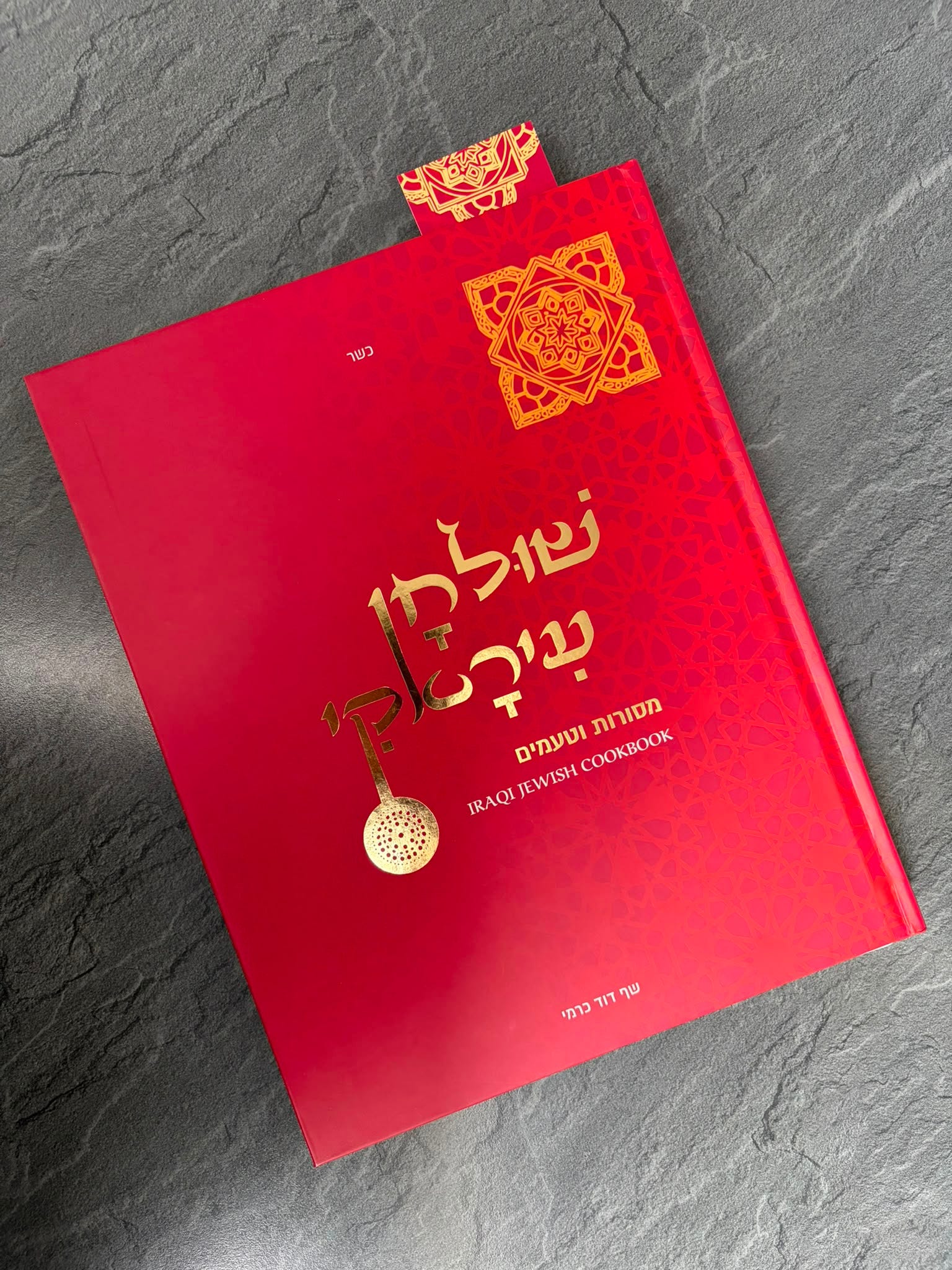
David Carmi’s Iraqi Jewish Cookbook, the book in which I first encountered a dish called Ingriyi.
Somewhere in its pages is also a Baghdadi-Indian dish I contributed - spayty - my own small deposit in a collective account. I suppose this is why the book was gifted to me by the author, as a token of appreciation.
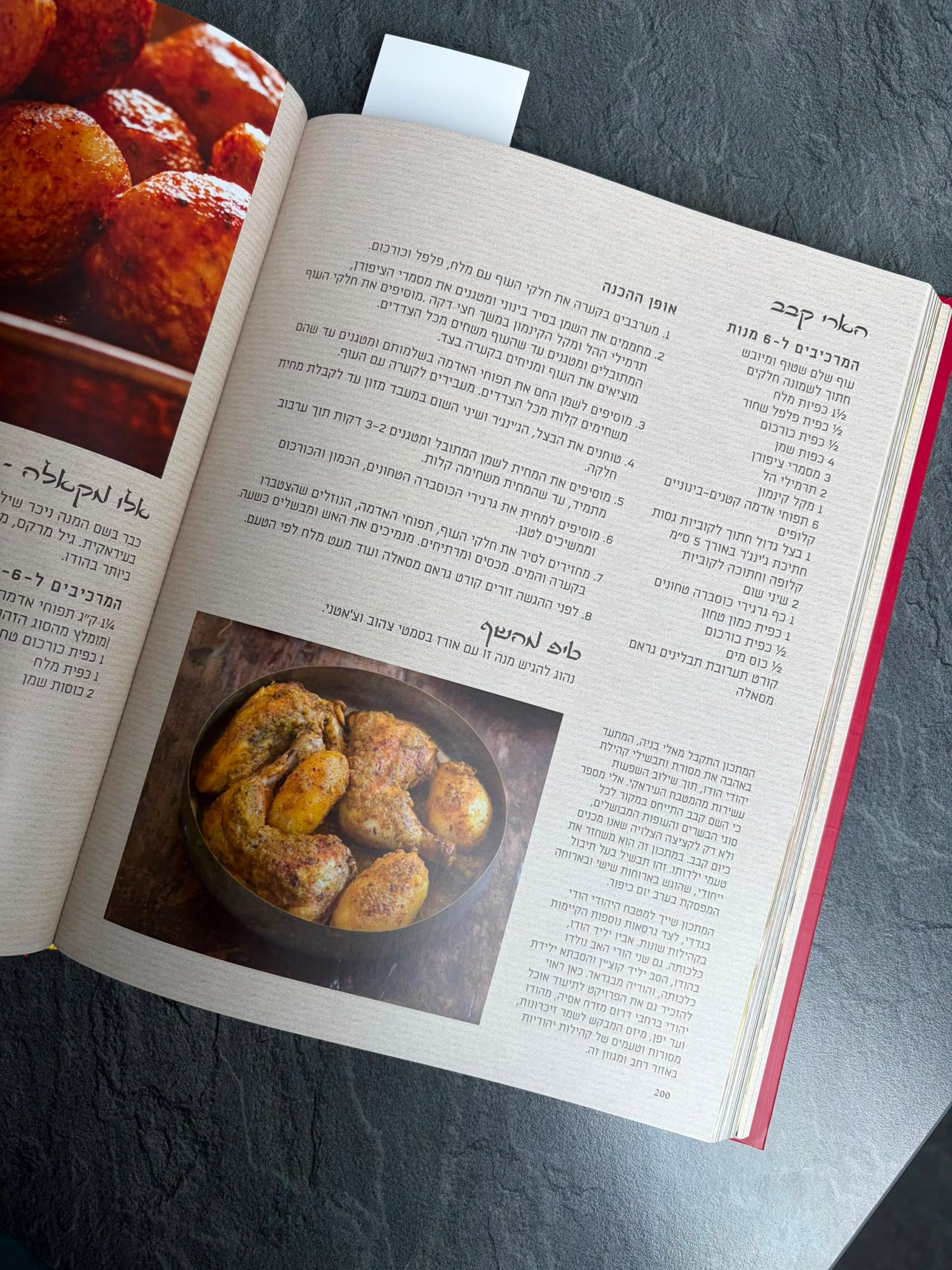
My contribution: Spayty, a Calcutta chicken curry, with potatoes, in a bamboo shoot and coconut milk sauce. If you cannot read the recipe in Hebrew, you can find it here.
So I did what you do when you find yourself between two covers: I leafed through the rest, curious about the company I was keeping.
I leafed past. A few pages from my contribution I found a recipe I did not know, with a name I could not parse. Ingriyi.
David Carmi called it a sort of Iraqi moussaka. I read the ingredients: eggplant, tomato, onion, sugar, dried apricots, lemon, a little turmeric and paprika.[1] That is not exactly a moussaka, I thought, and unusually vegetarian, but it reads like it’s going to be very good.
It was. The eggplant went silky. The apricots dissolved into the sauce until it was hard to say where the fruit ended and the gravy began. The dish was sweet, sour and deep, and yes, worth knowing.
Then I began pulling on the thread of the name.
This is what I do. Beyond Babylon, the book I am writing about Jewish kitchens around the Indian Ocean, rests on the conviction that a recipe is not only something to cook. It is also something to read. Ingredients and methods can preserve evidence of migration, adaptation and contact between communities.
But the trail of Ingriyi taught me something else. An archive does not only preserve. It can also confuse. And this is the topic of this essay: what’s in a name of a dish.
Two recipes under one name
In the 1970’s, in England Mavis Hyman, who grew up in Calcutta, published two recipes on facing pages of the canonical Indian-Jewish Cooking, under slightly different spellings of the same name: Incree and Ingree.[2]
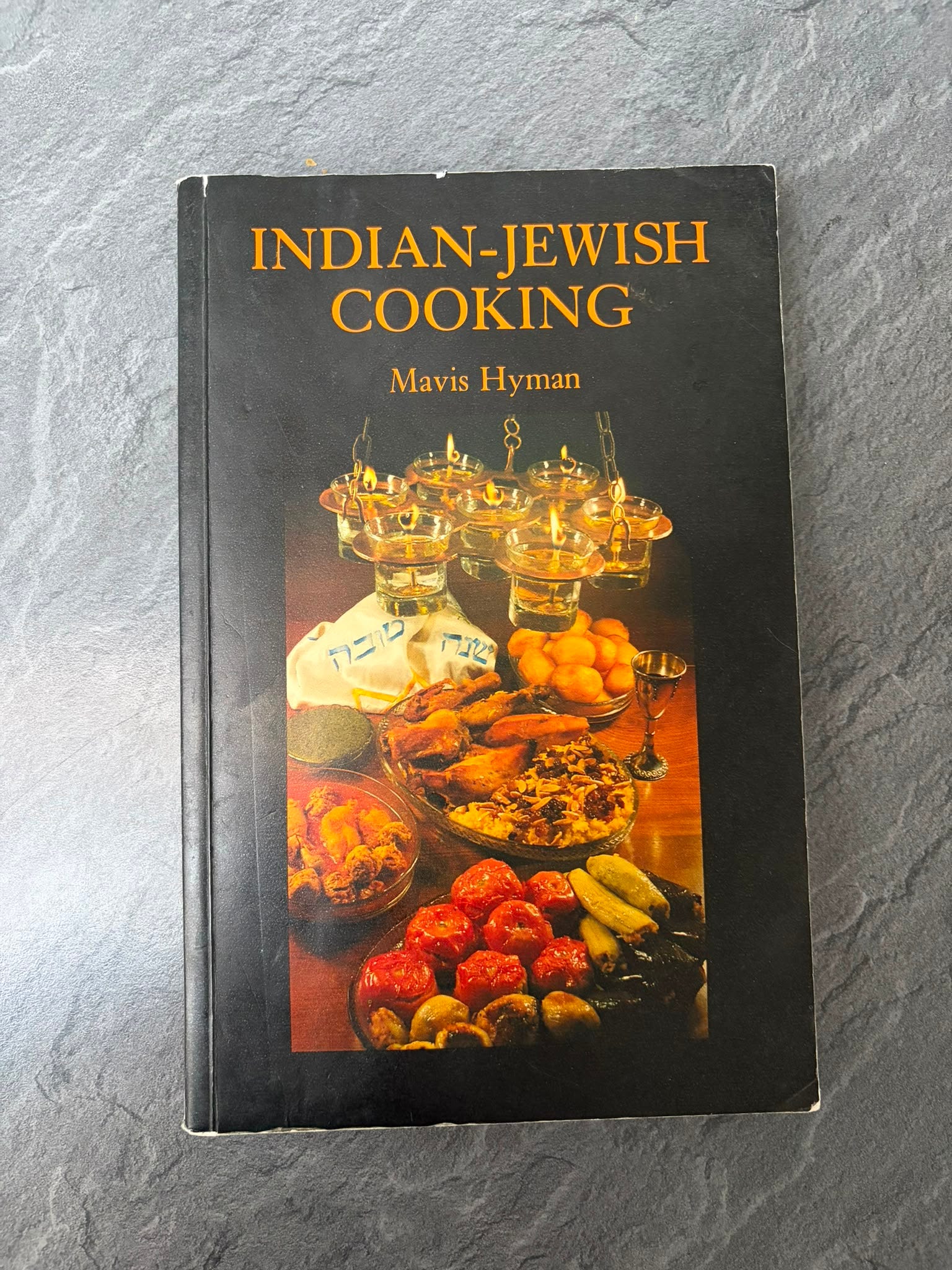
You have to be half deaf to not realize these two are close cousins, I thought, but Mavis somehow didn`t make this connection, but rather attributed each to a different Jewish Indain community - one in Bombay, the other in Cochin; so I delved further into her descriptions of the two recipes.
The first, incree, is introduced through the availability of kosher meat.
The other recipe she then gives is attributed to Cochin: lamb browned with onions, then red pepper, celery leaves, tomato purée and water; a pound of okra added once the meat is tender; lemon juice and sugar to finish. Eggplant appears only at the end, and as an alternative to the okra. Okra, btw, is native to Cochin.
I could not make this recipe behave or taste like Carmi’s Ingriyi, however often I read it. It is not layered or baked, there is no sugar or any other sweetener and the eggplant is optional. Hyman herself compares it to a Baghdadi dish recorded by one Daisy Iny called Bamiah Hamudh, sour okra with meat. Her wording is careful: Bamiah Hamudh is very similar to what Cochin Jews describe as Incree. Seems even she recognized how far this dish seemed from its Baghdadi namesake.
Her phrasing, then, leaves the dish unsettled. Incree may have become a broad household name in some Cochin kitchens for a sweet-sour meat-and-vegetable stew. A family may have moved the name from one dish to another. Hyman or her source may have folded two related dishes together. The page does not say, and it does not identify the Cochin cook the recipe came from.
The Bombay Ingree on the facing page looks more familiar at first. Minced chicken or beef is layered with potatoes, eggplant, tomatoes and three colours of pepper, covered with lemon slices, dressed with a gravy of oil, vinegar, lemon juice, ginger and garlic, then baked and finished with coriander. The eggplant and the layered construction do recall the Iraqi dish, faintly.
But almost everything else has shifted: potatoes and peppers have entered, ginger and coriander mark the Indian setting, and there is no sugar, tamarind or dried fruit. Once again, the sauce is sour but not sweet.
Yet the name remained in what is plainly a real community recipe, even a favourite for festivals and Friday nights, good cold for Saturday lunch. But it does not correspond with the Cochin stew on the facing page, and neither recipe accounts for Carmi’s.
I initially wanted to treat the two Hyman recipes as fragments of a single dish. Bombay had kept the eggplant and lost the sweetness; Cochin had kept the sweetness and made the eggplant optional. Set side by side, they seemed to invite reconstruction.
But that reading made an assumption the evidence could not support. It turned two complete dishes, each cooked in its own regional setting, into seemingly defective pieces waiting for someone with enough books to repair them.
I could place the recipes within one extended family without pretending that either was incomplete.
The fish in Cochin
Then a firmer Cochin connection turned up somewhere else.
On a website devoted to Spanish and Portuguese Jewish communities, I found a recipe called Sweet and Sour Fish, or Fish Ingriyi, contributed by Fiona Hallegua Amiel, who grew up in a leading Jewish family in Cochin.[3] The note says her ancestors arrived there from Iraq and Syria more than two hundred years ago, and that she learned to cook from her mother. This was no anonymous “Cochin” attribution in a compendium. Here was a named cook and a family history within which the recipe had been preserved.
Fiona’s Ingriyi begins with firm fish fillets seasoned with turmeric. Eggplant, onions and tomatoes are fried separately, then layered in a casserole with the fish. Tamarind, sugar and water are mixed into a sauce and poured over the layers. The dish is baked and served with rice.
Now THAT sounded right. Placed beside Carmi’s recipe, the relationship is immediate.
Both contain eggplant, onion, tomato, sugar and turmeric. Both depend on a sour element and on ingredients cooked separately before being brought together. Both make a composed dish rather than an undifferentiated stew. The differences are just as clear: true - Carmi’s version is meatless and Fiona’s is built around fish; Carmi uses lemon and Fiona uses tamarind; the dried apricots disappear while the sugar stays; paprika falls away while turmeric survives.
Yet, the similarities were too significant to ignore.
None of this proves that Carmi’s particular recipe became Fiona’s, generation by generation. They may be two branches of an earlier repertoire, or independent family arrangements of a flexible dish.
But the shared name did not travel alone. It stayed attached to eggplant and tomato, a sweet-sour sauce and a composed, layered construction. It surfaced in a Cochin family whose ancestors came from Iraq and Syria. And so in Fiona’s version, fish - a Cochini staple - occupies the centre and here tamarind supplies the sourness.
Together, the evidence preserves the structure that Carmi called “Iraqi moussaka” as a recognizable Ingriyi, along the migration route to Cochin. The recipe did not travel unchanged, and the chain cannot be documented cook by cook, but its continuities remain legible: the name, the eggplant-and-tomato architecture, the sweet-sour balance and the layering. Fiona’s fish may mark one Cochin branch of the dish.
Update, 3 August 2026: After finding Fiona’s recipe, Elana Benjamin - Australian author of Indian Jewish Food - sent me another Fish Ingriyi, published in Sydney in 1990 by the NSW Association of Sephardim. Awafi calls it “Iraqi Sweet and Sour Fish.”
Its ingredients complicate the route again: fish and fried eggplant are layered with potatoes, onions, celery leaves, coriander, ginger and garlic, then baked with sugar and citric acid. It resembles Fiona’s dish in protein, eggplant, layering and sweet-sour construction, but its potatoes, ginger and coriander also recall Hyman’s Bombay Ingree. There is no tomato or tamarind.
The Awafi recipe means that fish itself cannot identify the Cochin branch. An Iraqi-attributed Fish Ingriyi was already in circulation within the Sydney Sephardi community by 1990, although the cookbook page does not establish where or when that version first acquired fish.
Fiona’s importance lies elsewhere. Her recipe places Fish Ingriyi within a named Cochin family whose ancestors came from Iraq and Syria and in which the dish passed from mother to daughter. In her family’s version, tamarind supplies the sourness and rice accompanies the casserole.
In any event, the Iraqi end of the route was not confined to cookbooks.
Samantha Ellis, writing in her memoir “cutting onions on my heart”, also speaks about the Iraqi Jewish food she hoped to pass to her son, and describes her family’s Ingriyi as fried aubergine layered with fried lamb or beef and sliced tomato, then simmered with turmeric, lemon juice and date syrup.[5]
Other living Iraqi-Jewish recipes confirm that Ingriyi remains in active circulation, while adjacent dishes reveal how its ingredients and names overlap with a wider sweet-sour repertoire. Sharon Gomperts and Rachel Emquies Sheff record flattened meatballs sandwiched between eggplant slices. Annabel Rabiyah’s Jewish Food Society recipe layers browned minced meat with eggplant, peppers and tomato. Vered Guttman records a related apricot-meatball dish and notes that she encountered ingryieh as one of the names applied to versions of it.[6] So Ingriyi is still being cooked, not merely remembered.
The route is in the sources, but only in evidentiary fragments. Claudia Roden records modern Ingriyi beside what she calls a “curiously similar” medieval tabahiya. She also notes that Ingriyi became a festive and Sabbath chicken dish in Bombay’s Iraqi Jewish community, served cold on Saturday lunch, but her account does not follow it into Cochin.[7]
Hyman might have known that the foods she called Incree and Ingree belonged to a migration from Baghdad, yet her headings, “Bombay” and “Cochin,” preserved separate destinations without the household routes that connected them. And now Fiona’s recipe supplied me with a missing family geography: ancestors from Iraq and Syria, and a daughter raised in Cochin who learned to cook from her mother.
So each source held part of the journey. None that I have found sets the surviving recipes beside one another and follows the change all the way into a named Cochin family. The contribution here is not the discovery that Ingriyi was Jewish Iraqi, or that Iraqi Jews carried it to Bombay. It is the connection between the Iraqi recipes and Fiona’s family recipe in Cochin.
And this made me happy. In the end, the Indian recipe did not have to be reconstructed from scattered fragments. It actually appears within a particular family history.
The fish tempts explanation. Cochin is a port, and fish belongs naturally to the kitchens of the Malabar coast. Kosher fish also requires no ritual slaughter, so it wouild be easier to make anywhere.
What a cook can do with the archive
I still do not know what the word Ingriyi means. I cannot make it mean eggplant merely because eggplant appears in several versions. Carmi’s family called its dish Ingriyi be-’ingan, Ingriyi with eggplant, which may suggest the name once covered more than an eggplant version. It does not solve the etymology. Nor can I identify a single original recipe from which every surviving version descends.
The archive cannot give us back a single original dish. What it can do is reveal the range of possibilities the name has carried, and allow a cook to enter that history consciously, adding another branch rather than pretending to reassemble the trunk.
So after cooking Carmi’s meatless Ingriyi, I made another version. I kept the eggplant, tomato, apricots and sweet-sour sauce, and added fish from the Cochin recipe, with ginger and coriander from the Bombay recipe. It was rich, complicated and very good.
At first I wanted to call it the dish restored. I imagined that each branch had lost something in migration and that, by reading all the recipes together, I could put the missing parts back.
Comparison itself defeats that idea. Carmi’s dish was not incomplete because it contained no meat. Fiona’s is not deficient because it contains fish rather than lamb. Hyman’s Bombay casserole does not need its sweetness returned by a later cook. Every version belongs to the kitchen that made it. My fish, apricot and eggplant Ingriyi belongs to mine.
My version is not a restoration. It is an interpretation made from reading and listening, a deliberate addition to a continuing history.
That is the work of Beyond Babylon. A recipe can preserve the shape of a migration without preserving every ingredient, and it can carry several histories under one name. Reading those histories does not produce a master recipe. It shows how cooks kept making the dish answer to new places and new circumstances.
The transmission did not break. It branched beyond my initial line of sight. I am one of the people carrying it now. I received a name, several recipes and a set of unresolved questions; I cooked from them, added something of my own, and passed the result on.
What survives is not an intact recipe. It is the possibility of recognition after change, and the invitation to make another branch.
Fish, Eggplant and Apricot Ingriyi
Test-kitchen draft; serves 6
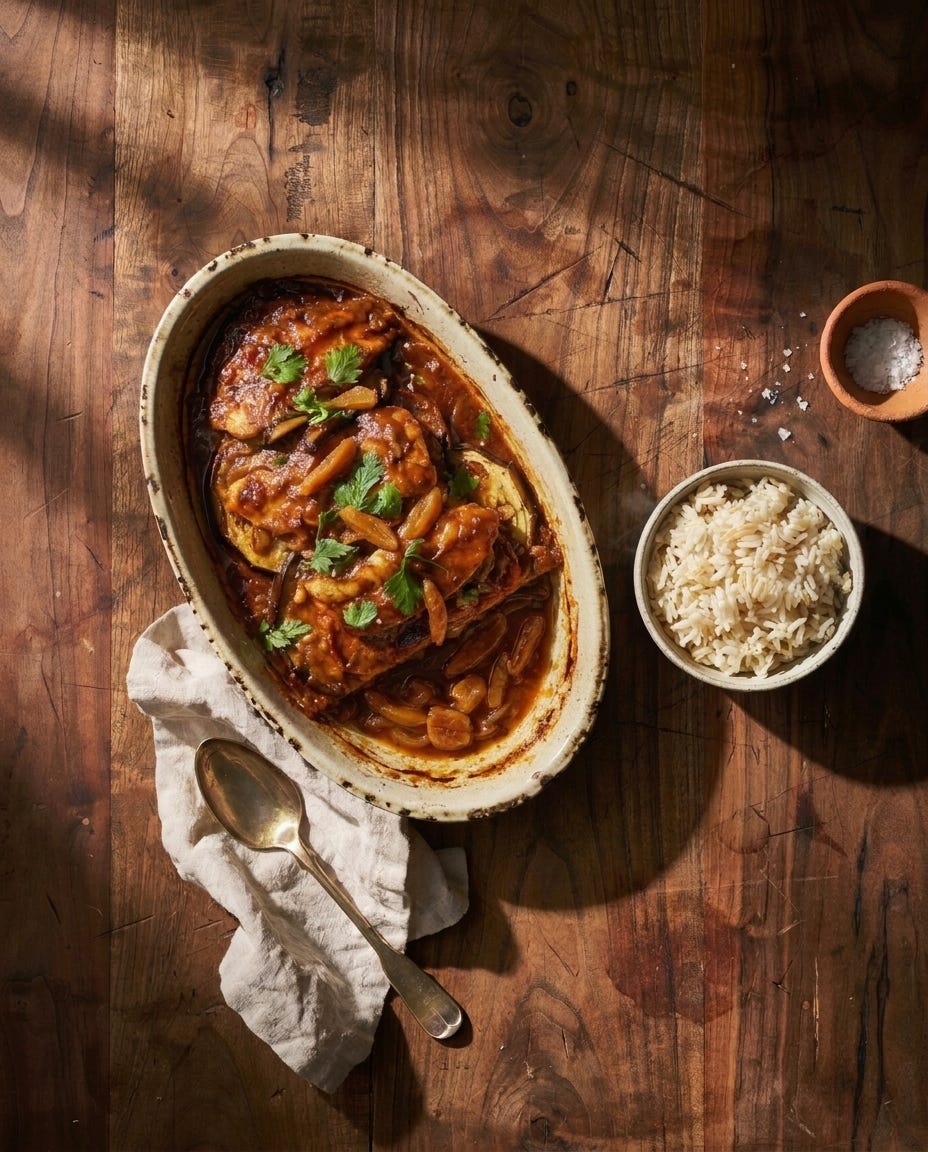
The lamb version described above is the dish I have already cooked. Finding Fiona’s recipe suggested another branch I had never heard of.
The fish Ingriyi described above is the dish I have already cooked.
It brings Carmi’s apricots and Samantha Ellis’s date syrup into Fiona’s Cochin construction, with ginger and coriander from Hyman’s Bombay Ingree. The Awafi recipe, which I found afterwards, shows that fish, eggplant, ginger and coriander had already appeared together in an Iraqi Fish Ingriyi.This is not a reconstruction of an original Ingriyi, nor is it Fiona Hallegua Amiel’s family recipe. It is a deliberate proposal for a new branch.
The fish, tamarind and layered eggplant-onion-tomato structure come from Fiona’s Cochin Ingriyi.[3] The dried apricots, turmeric and paprika come from David Carmi’s meatless version.[1] Date syrup replaces granulated sugar after Samantha Ellis’s description of her family’s Iraqi Ingriyi.[4] Ginger and coriander enter from Hyman’s Bombay Ingree and the Awafi recipe,[2] while the deeply browned onions and diluted tamarind sauce follow the construction recorded by Claudia Roden.[6]
Ingredients
2 large eggplants, about 1 kg total
Fine sea salt
6 tablespoons olive oil or neutral oil, divided, plus more if needed
3 large onions, thinly sliced
1 teaspoon finely grated fresh ginger
500 g ripe tomatoes, sliced about 1 cm thick
1 kg firm, skinless white-fish fillets, such as cod, hake or halibut, cut into 6 portions
1 teaspoon ground turmeric, divided
½ teaspoon sweet paprika
Freshly ground black pepper
4 unsweetened dried apricots, thinly sliced
1 tablespoon unsweetened tamarind concentrate
1½ tablespoons pure date syrup
180 ml warm water or light vegetable stock
3 tablespoons chopped coriander leaves
Boiled basmati rice, to serve
Method
Heat the oven to 220°C, or 200°C fan. Cut the eggplants into 1 cm rounds, salt them lightly and leave them in a colander for 30 minutes. Pat them thoroughly dry.
Brush the eggplant with 2 tablespoons of the oil and arrange it on lined baking trays. Roast for 20–25 minutes, turning once, until tender and golden on both sides. Set aside. The roasting replaces the frying used in the source recipes; it is a practical choice for this version, not a historical claim.
While the eggplant roasts, heat 2 tablespoons of oil in a wide frying pan over medium-low heat. Add the onions with a pinch of salt and cook for 18–25 minutes, stirring occasionally, until very soft and deeply golden. Add the ginger and cook for 1 minute. Transfer to a bowl.
Lay the tomato slices on one of the baking trays, brush them lightly with oil and roast for 8–10 minutes, just until they begin to soften. Remove from the oven and reduce the temperature to 190°C, or 170°C fan.
Season the fish with 1 teaspoon salt, ½ teaspoon of the turmeric, the paprika and black pepper. Heat the remaining oil in the frying pan over medium-high heat. Sear the fish for about 1 minute on each side, only until its surface is set; it should remain raw inside.
Whisk the tamarind, date syrup, remaining ½ teaspoon turmeric and 180 ml warm water or stock together. Add ½ teaspoon salt, then taste. The sauce should be distinctly tart, with the sweetness arriving afterwards. Tamarind concentrates vary, so adjust with a little more water, tamarind or date syrup if necessary.
Arrange half the eggplant in a lightly oiled baking dish. Add half the onions, tomatoes and sliced apricots. Lay the fish over them, then cover with the remaining onions, tomatoes, apricots and eggplant. Pour the tamarind-date sauce evenly over the dish.
Cover and bake for 15 minutes. Uncover and bake for another 8–12 minutes, until the fish is just cooked and flakes under gentle pressure. Rest for 10 minutes, scatter with coriander and serve with boiled basmati rice.
👉 Get your recipe for Fish, Eggplant and Apricot Ingriyi here
Elli Benaiah spent thirty years as a trial lawyer, then cooked professionally and managed restaurants in Switzerland and Germany before turning to food history. He is at work on a history of the Jewish food of the Indian Ocean.
Sources
[1] David Carmi, Iraqi Jewish Cookbook: Traditions and Flavors (2026), “Ingri be-’ingan: Sweet-and-Sour Eggplant Casserole,” 64, contributor’s copy in the author’s possession.
[2] Mavis Hyman, Indian-Jewish Cooking (London: Hyman Publishers, 1992), 112–13.
[3] Fiona Hallegua Amiel, “Sweet and Sour Fish (Fish Ingriyi),” S&P Central, https://www.sandpcentral.org/food1-c170u (accessed July 30, 2026).
[4] Millie Gubbay, Mozelle Isaac and Gaby Gubbay-Nemes, eds., Awafi: Sephardi Cooking—Exotic Cuisine from the Middle and Far East (Sydney: NSW Association of Sephardim, 1990), 60.
[5] Samantha Ellis, “‘Too Sticky. Too Saucy. Too Weird’: Could I Persuade My Son to Eat the Food of My Heritage?,” The Guardian, April 5, 2025, https://www.theguardian.com/food/2025/apr/05/too-sticky-too-saucy-too-weird-could-i-persuade-my-son-to-eat-the-food-of-my-heritage.
[6] Vered Guttman, “Iraqi Meatballs in Sweet and Sour Apricot-Tomato Sauce,” Vered’s Israeli Cooking, https://veredguttman.com/iraqi-meatballs-in-sweet-and-sour-apricot-tomato-sauce/; Sharon Gomperts and Rachel Emquies Sheff, “Ingriye—A Favorite Iraqi Eggplant Casserole,” Sephardic Spice Girls, July 11, 2024, https://sephardicspicegirls.com/ingriye-a-favorite-iraqi-eggplant-casserole/; Annabel Rabiyah, “Ingriye (Roasted Eggplant With Tomatoes and Beef),” Jewish Food Society, August 31, 2021, https://www.jewishfoodsociety.org/recipes/ingriye-roasted-eggplant-with-tomatoes-and-beef. All accessed July 30, 2026.
[7] Claudia Roden, The Book of Jewish Food: An Odyssey from Samarkand to New York (New York: Alfred A. Knopf, 1996), 400–401. Roden describes Ingriyi as an Iraqi dish that became a festive and Sabbath dish of Bombay’s Jewish community.
Such an interesting use of apricots, which often appear in traditional kitchens. I wonder if the flavor changes much with the addition of the tamarind paste-the flavor profile is similar
This was a fascinating read, Elli. I loved the threads you pulled at and those you sewed together.
The recipe looks incredible, I shall have to give it a try soon.