
The Hamandasta
Words My Grandmother Ground Into Me

words
I was born a collector: stories, recipes, handmade Indian wooden tops, old seltzer bottles. And yes, also words.
Lately, I have started collecting the words of my childhood. Words in other languages I do not speak, but my grandparents once did.
Not the formal ones - not prayer book Hebrew or schoolbook English - but the stray words my father would use at the table, in the car, in irritation, or even in affection. Words I understood by context long before I understood their meaning. Words that lived in tone more than grammar.
I never knew what language they belonged to.
There was hamandasta - my grandmother Ruby used it in the kitchen.
For years I thought it was a Purim word - something lurking in the Book of Esther, perhaps a monstrous cousin of Haman, the villain who caused all the chaos in Esther`s Persia.
But was it?
Were these words Judeo-Arabic? Hindustani? A Calcutta port hybrid? Baghdad filtered through Bombay and bent again in Bengal?
Or simply speech spoken past me, absorbed without translation?
I am compiling these words now. Writing them down. Sorting them by probable origin. Arabic here. Urdu there. Hebrew, perhaps. And a final category: the unplaceable - the words that do not fit into any drawer.
Not because I want a glossary.
Because I refuse to let them disappear.
Languages thin quietly in diaspora. First the script fades. Then grammar loosens. Then vocabulary dissolves into anecdote - and finally into silence.
If I do nothing, my son will inherit a story without its sounds.
instruments
I was wrong about hamandasta.
But not entirely.
I went looking.
The hamandasta is not a villain from the Book of Esther. It is a mortar and pestle. Its name travelled from Persian hāvandast - hāwan (mortar) and dasteh (handle) - west into Mesopotamia and east into South Asia.
In Iraq it became hawan. In Urdu and Hindustani, haawan-dasta. In Bengal, hamandista.
The word crossed empires and adjusted to new mouths.
The object travelled with it.
Stone, brass, iron. Heavy bowls, flared pestles. It appears in kitchens and apothecaries alike - crushing cumin for curry, pounding herbs for medicine. It was never ornamental. It was a working technology of flavour.
Short film: A traditional hamandasta being cast and turned. (Credit Youtube).
A hamandasta is rhythm. It is sound. It is muscle. It is the opposite of the electric grinder.
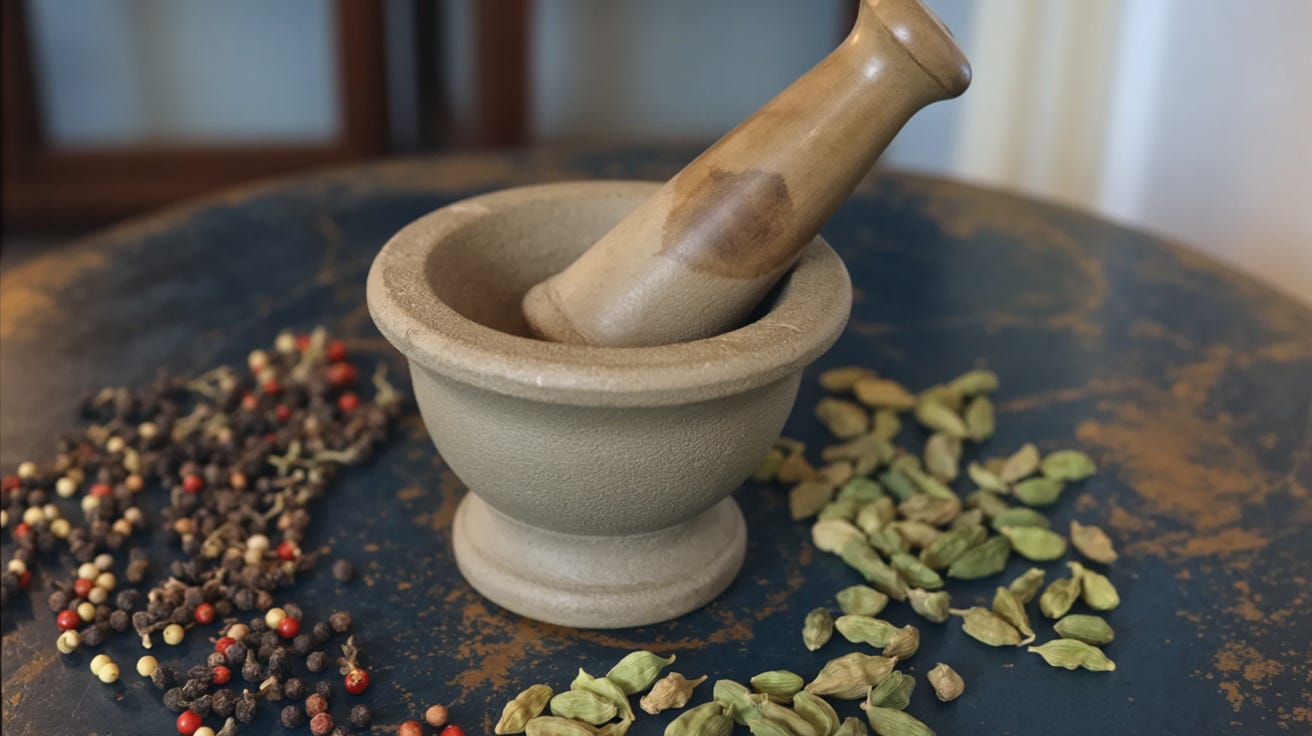
Hamandista. Where flavour waits for force.
Blades slice and heat. Hand-pounding bruises slowly. Too much heat drives off essential oils and leaves bitterness behind. Old cooks knew this without thermometers. They roasted gently. Cooled spices on plates so residual heat would not scorch them.
They bhuno-ed powdered spice in oil until the excess moisture evaporated and the oil resurfaced at the edges - the quiet sign that flavour had settled.
spices
Spices, like words, do not reveal themselves intact.
A cumin seed resting whole in the palm tells you nothing. It must be crushed before it releases its oil. It must meet heat before its fragrance rises. Too much flame and it turns bitter; too little and it remains raw.
In the kitchens I grew up with, whole spices entered hot oil at the beginning - cardamom, clove, cassia - releasing themselves gradually. Powdered spices came later, coaxed carefully, buffered by onion, ginger, tomato, water.
The mortar insisted on patience.
Across Iran, Iraq, Cochin, Calcutta, Kerala, Bengal, the hamandasta kept time. In some homes its thud marked the afternoon. In others it prepared turmeric once a month, chilli and coriander ground fresh so they would not lose potency.
It was a domestic metronome.
I knew their heat before I knew their language.
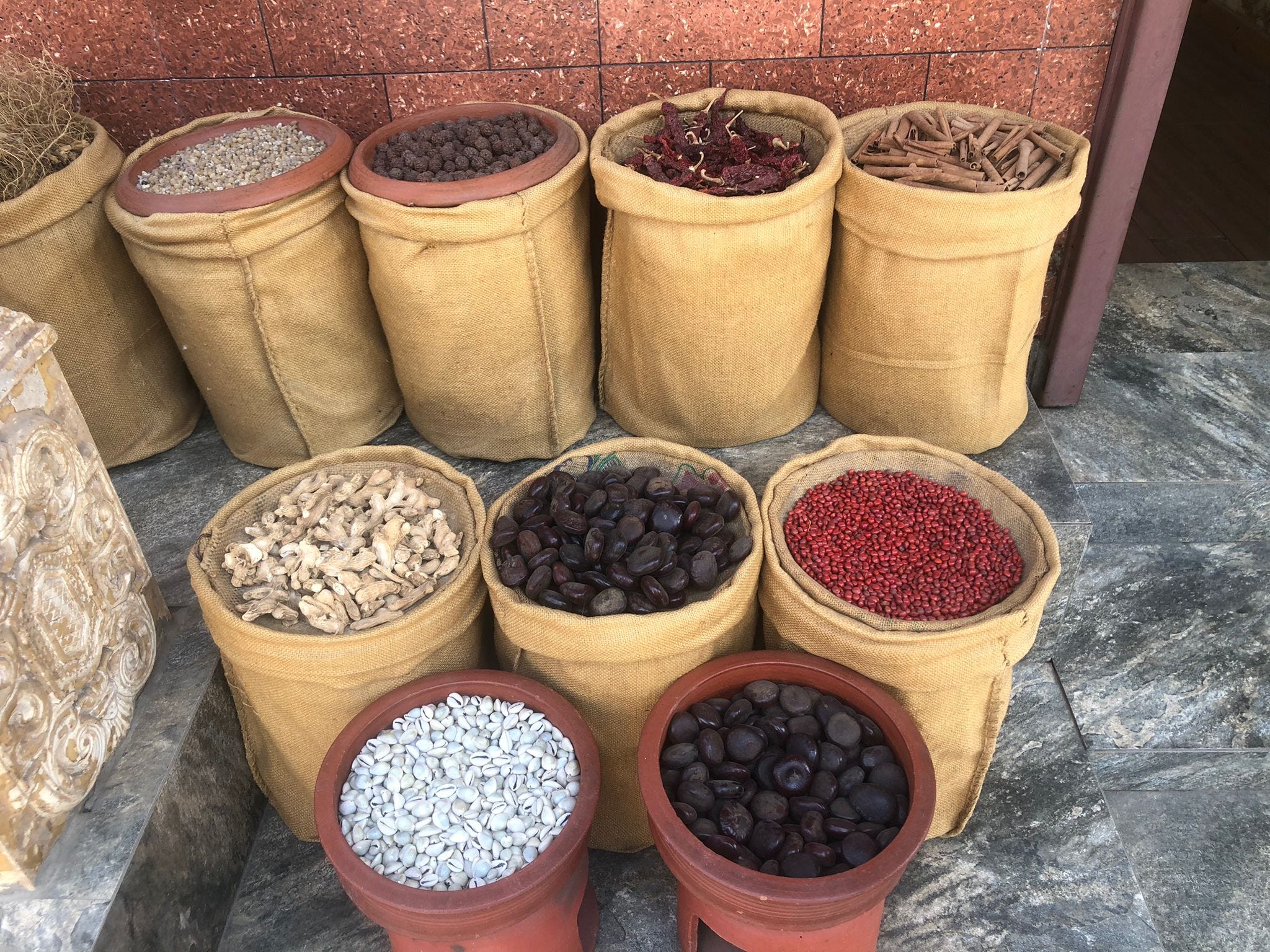
Whole spices before the crushing - vocabulary awaiting grammar.
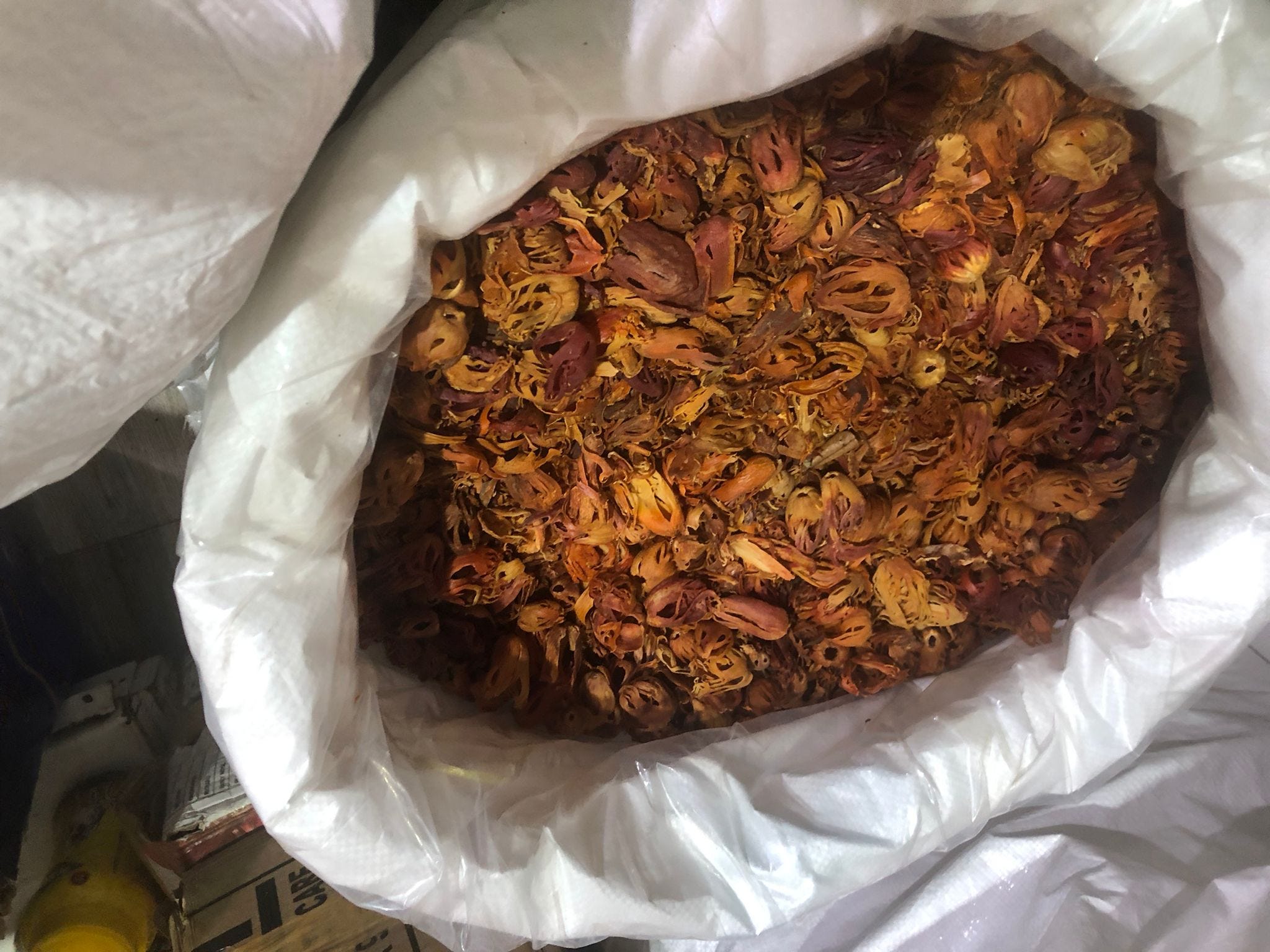
Mace - the hidden membrane revealed when the nutmeg splits.
blends
What I once mistook for linguistic disorder was, in fact, adaptation - the grammar of survival in port cities where no single tongue was ever enough.
When granny Ruby said hamandasta, she was not naming a tool. She was summoning a sound - the dull percussion of stone against seed. She was invoking kitchens that preceded me: Baghdad, Bombay, Calcutta.
Perhaps the words in her mouth were already spices.
I prepared three blends that carry the same logic as his language - migration without erasure.
A Bengali garam masala, spare and deliberate: green cardamom, clove, cinnamon, bay leaf. Roasted gently. Ground fresh. Added at the end of cooking like a final breath. Warmth without aggression. Perfume without clutter.
A Trinidad curry powder - child of indenture and empire. Cumin and coriander as structural anchors, but softened by cinnamon and star anise, deepened with turmeric, warmed by cayenne. Not North Indian, not Jamaican - but something recalibrated in Caribbean air. Memory adjusted to climate.
And a Sri Lankan roasted blend - darker, smokier, with fennel sweetness and toasted rice lending body. Chillies taken almost to smoke. A blend that smells faintly of the Malabar coast.
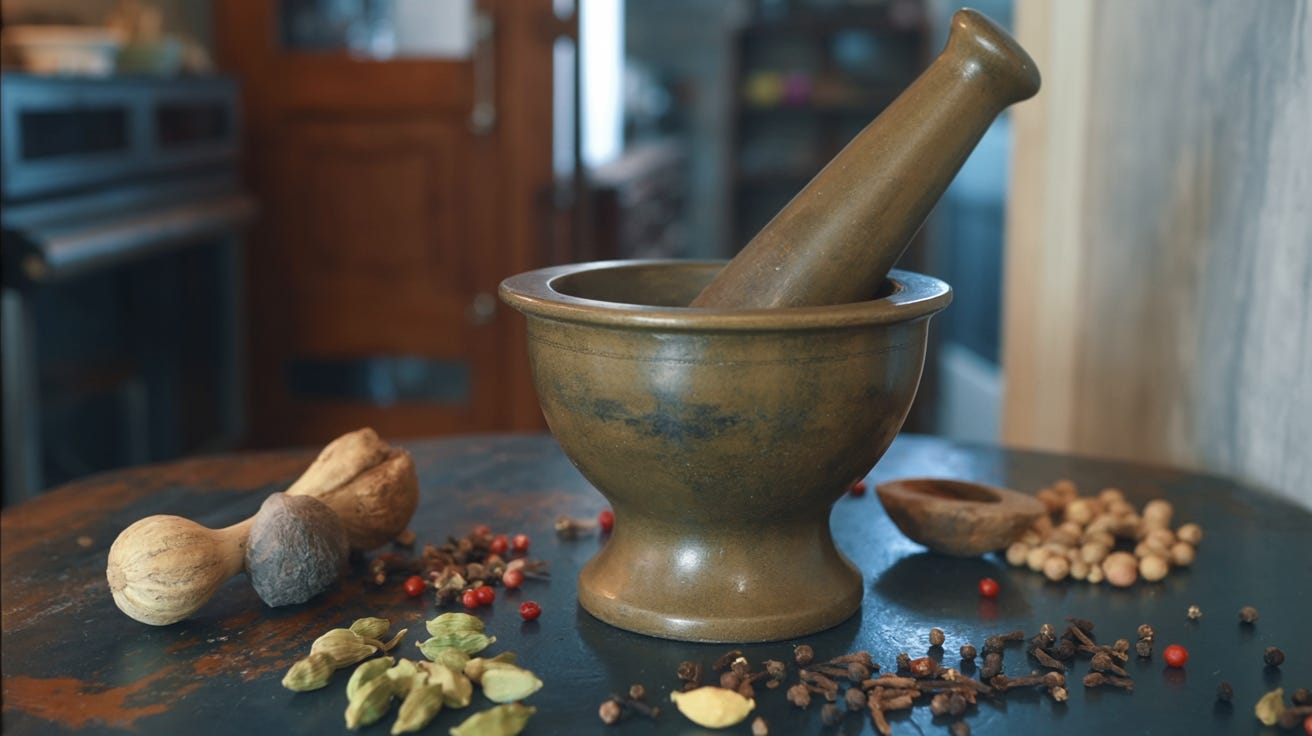
The hamandasta: where seeds surrender their oil and words release their meaning.
Under the pestle, they released differently.
One exhaled depth - almost bitterness, almost memory.
One opened softly, floral and warm.
One lifted - cinnamon and leaf and something green beneath.
Side by side, they look alike.
Brown. Familiar.
They do not smell alike.
Related, but not interchangeable.
Like dialects.
Like families.
1. Bengali Garam Masala
(Calcutta home-style blend)
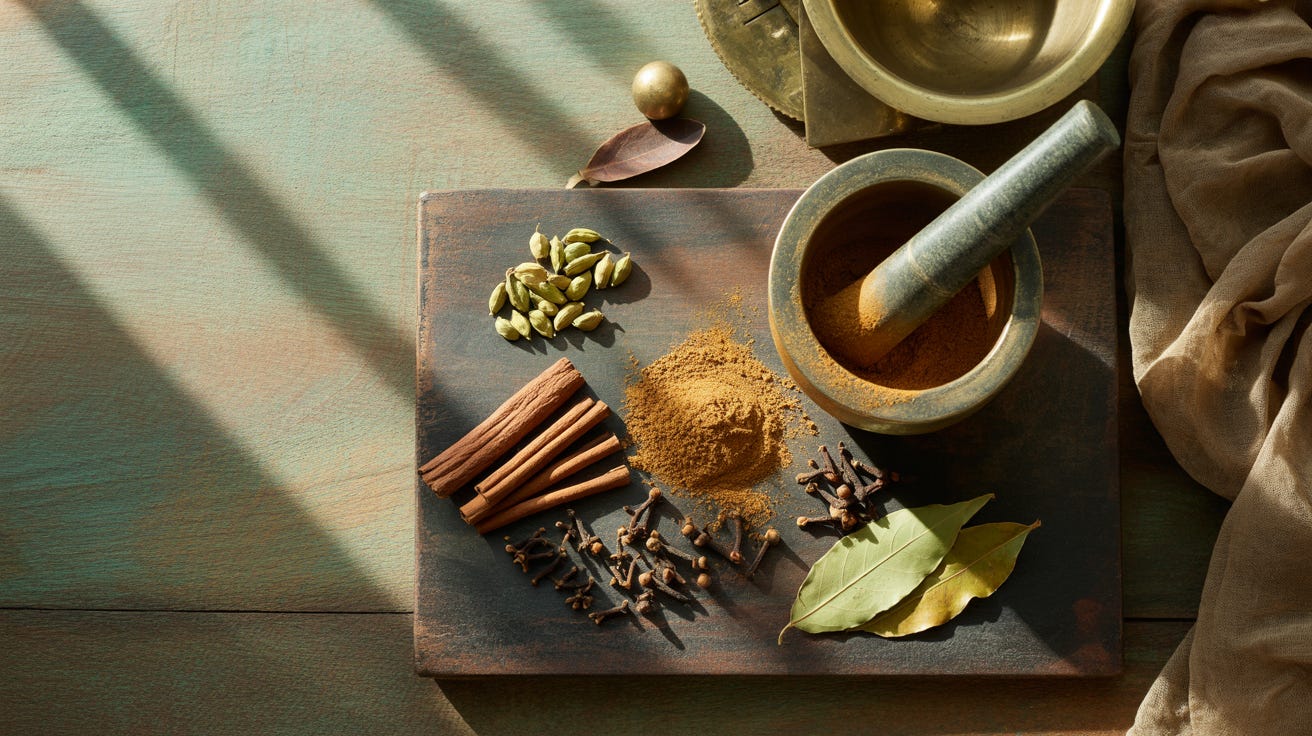
Bengali garam masala, Calcutta style - cardamom-forward, warm, restrained heat.
Bengali garam masala, as Asma Khan describes in her Monsoon, is spare and deliberate - not the crowded twelve-spice anonymity of commercial blends, but a small constellation of aromatics that speak clearly: green cardamom, clove, cinnamon or cassia, and bay leaf.
In Calcutta homes, it was often made in handful quantities, roasted gently and ground fresh so that its fragrance would not dissipate into dust. “Garam” does not mean chilli heat; it means warmth - woody, floral, enveloping.
In Bengali cooking the whole spices bloom early in oil, but the powdered garam masala is often added at the end, to preserve its volatile aroma. It is less a background seasoning than a final breath - a perfumed exhale over pilau or meat just before serving. In that restraint lies its elegance: warmth without aggression, fragrance without clutter.
Ingredients
20 green cardamom pods
1 tablespoon cloves
3 sticks cinnamon (about 7–8 cm / 3 inches each)
(Asma notes she prefers cinnamon over cassia for Bengali dishes, as cassia is more robust and fiery; cinnamon is more delicate and fragrant.)3 Indian bay leaves (cassia leaves)
(If small, use 4–5.)
Method
Roast gently.
Heat a heavy-bottomed pan or cast-iron skillet over low–medium heat. Add the whole spices (except the bay leaves initially) and stir gently to ensure even heating.Watch carefully.
Roast for about 12–15 minutes, keeping the heat low so the spices warm slowly rather than scorch. If they begin smoking quickly, lower the heat or briefly remove the pan from the flame.Add bay leaves at the end.
In the final few minutes, add the bay leaves and allow them to darken slightly.Cool completely.
Transfer the spices to a plate and spread them out. Let them cool fully before grinding - warm spices release oil too quickly in a grinder.Grind.
Once cooled, break the cinnamon into smaller pieces and tear the bay leaves. Grind in short pulses until fine.Store.
Transfer immediately to an airtight container. Store in a cool, dry place. Best used within 1–2 months for maximum fragrance.
How It Is Used
In Bengali cooking, whole spices are often added early to hot oil to infuse warmth.
But powdered garam masala is typically added towards the end of cooking, preserving its volatile aroma.
It is not chilli-hot.
It is warm, floral, woody - a final note, not a base chord.
👉 Get your PDF printable card for Bengali garam masala here
2. Trinidad curry powder
Diaspora Blend – Warm, Sweet, Golden
Trinidad curry powder is a child of indenture and empire.
When Indian labourers were brought to Trinidad after the abolition of slavery in 1838, they carried not only memory and religion, but spice logic. Mostly from Bihar and Uttar Pradesh, they arrived with knowledge of roasting cumin and coriander, of fenugreek’s bitterness, of turmeric’s earth.
In the Caribbean, those instincts met new conditions: different soils, different markets, different heat. Over time, the blend softened and sweetened. Cinnamon and star anise became more pronounced, cayenne replaced fresh chilli, turmeric deepened the colour into gold.
What emerged was not North Indian garam masala, nor Jamaican curry powder, but something distinct - rounder, gentler, almost perfumed. It lacks the aggressive heat of some blends and instead leans warm and slightly sweet, which is why it pairs so beautifully with a flaky Jamaican patty: spice without domination, warmth without burn. Like so many diasporic blends, Trinidad curry powder is not imitation. It is adaptation - a memory recalibrated in a new climate.
If Bengali garam masala is restraint - cardamom and clove added at the end like a final breath - Trinidad curry powder is diaspora in full sunlight. Both descend from North Indian spice logic carried across oceans: roasting whole seeds, balancing warmth and bitterness, trusting cumin and coriander as structural anchors. But where Calcutta preserves perfume and delicacy, Trinidad leans into sweetness and colour - cinnamon and star anise rounding the edges, turmeric deepening the gold. My grandmother’s spice grammar lived somewhere between the two: Iraqi warmth meeting Indian pantry.
Trinidad curry tastes to me like that middle ground - not aggressive, not austere, but generous. A blend shaped by indenture and survival, softened by Caribbean air, and perfectly at home beside a Jamaican patty.
Ingredients
4 tbsp cumin seeds
2 tbsp whole coriander seeds
1 tbsp cloves
1 tbsp poppy seeds
1 tbsp mustard seeds
1 tbsp fenugreek seeds
1 tbsp black peppercorns
2 tbsp ground cayenne pepper
2 tbsp ground cinnamon
2 tbsp ground star anise
4 tbsp ground turmeric
4 tbsp ground ginger
Method
Roast the whole spices.
In a dry heavy-bottomed pan over low–medium heat, toast the cumin, coriander, cloves, poppy seeds, mustard seeds, fenugreek, and black peppercorns. Stir constantly for 5–7 minutes until fragrant. Do not let them smoke.Cool completely.
Transfer to a plate and allow to cool fully. Residual heat can cause bitterness if ground too soon.Grind.
Grind the roasted spices to a fine powder using a spice grinder or a hamandasta.Blend.
Combine the freshly ground mixture with cayenne, cinnamon, star anise, turmeric, and ginger. Mix thoroughly until uniform in colour.Store.
Transfer to an airtight container. Store in a cool, dark place. Best used within 2–3 months for maximum fragrance.
Notes
This blend is warmer and slightly sweeter than many North Indian curry powders.
Excellent with chicken, chickpeas, or vegetable curries.
A perfect companion to Jamaican patties - fragrant rather than fiery.
3. Sri Lankan Roasted Curry Powder
(Madhur Jaffrey–style, with rice)
Ingredients
3 tbsp coriander seeds
1½ tbsp cumin seeds
1 tbsp fennel seeds
½ tsp fenugreek seeds
1 tbsp raw white rice
8–12 dried red chillies
1 tsp black peppercorns
4–5 cloves
2–3 green cardamom pods
1 small stick cinnamon
8–10 fresh curry leaves (or 1 tbsp dried)
½ tsp turmeric (added after grinding)
Method
Roast in stages.
Over medium heat, dry-roast the coriander first until darkened and fragrant. Add cumin, fennel, fenugreek, and rice. Continue roasting until the rice turns golden and the spices deepen in colour.Add aromatics.
Add chillies, peppercorns, cloves, cardamom, cinnamon, and curry leaves. Roast until the chillies darken and everything smells deeply toasted - darker than typical Indian roasting.Cool completely.
Grind finely.
Stir in turmeric after grinding.Store airtight.
Flavour Profile
Dark, smoky, and assertively roasted, with fennel sweetness and a deep chilli heat softened by the toasted rice.
aroma
What I heard from my dad was not language thinning in diaspora.
It was aroma rising.
When I grind cumin now - slowly, by hand - what escapes into the air is not only oil, but syllable.
The scent reaches me before the meaning.
And in that fragrance, my grandmother speaks again
If this essay resonated with you, I’m grateful you’ve read this far.
Beyond Babylon continues to trace Jewish life and food across unexpected geographies.
You’re welcome to subscribe or share the piece with someone who might enjoy it.
In Delhi we called it imaamdasta.