
Saèed Roti aka Laffa
The Bread That Traveled From Baghdad to India

Before we bid farewell to bread for Passover, let’s talk about one that has traveled far—Saèed Roti, also known as Syed Roti in Calcutta. Some breads are just bread. Others carry history, migration, and the scent of a world that once was.
A Memory of Bread and Fire
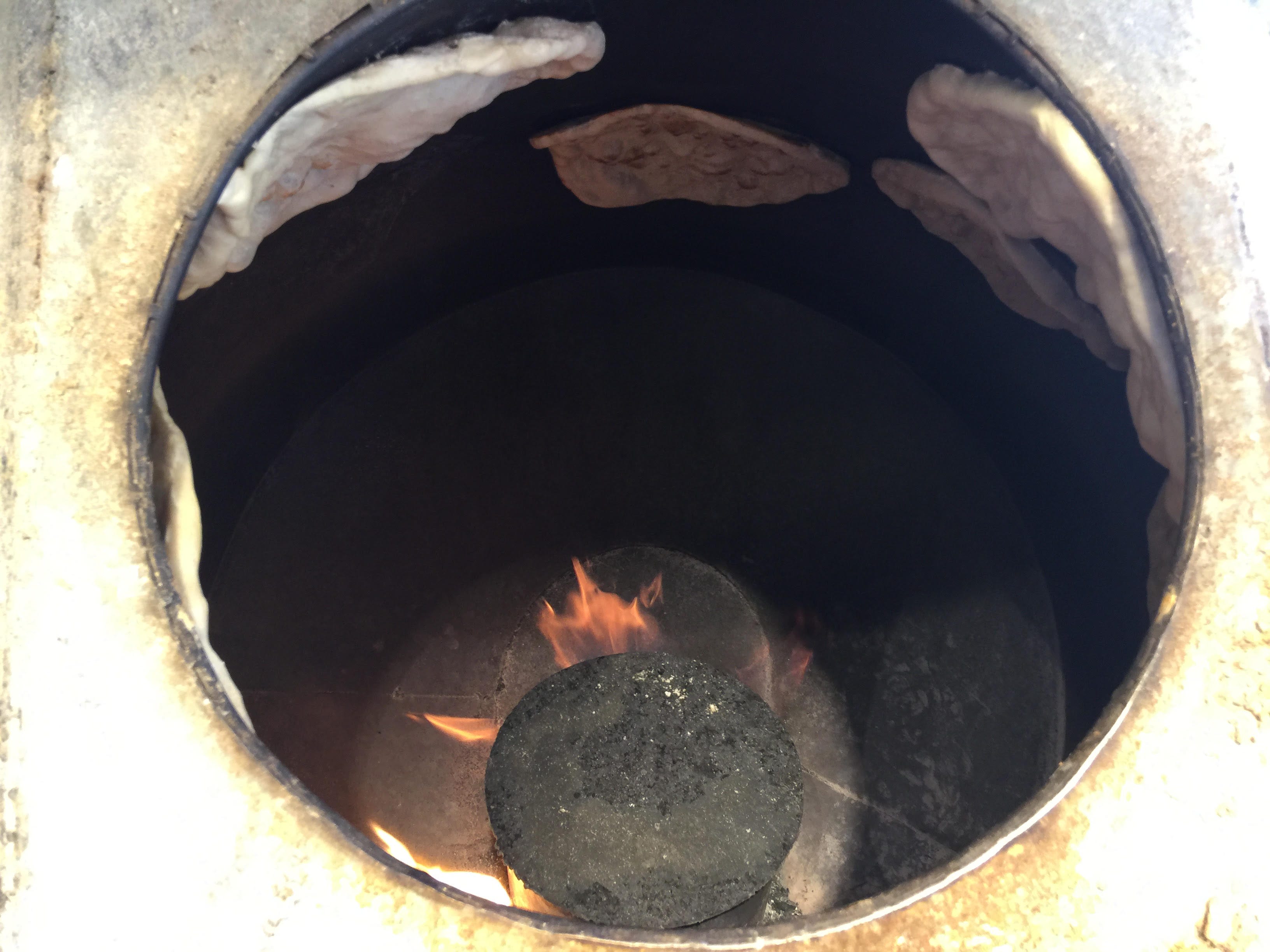
Back in Israel, in Ramat Gan, Saturday nights meant one thing: a trip to the Iraqi bakery. My father would take us on a drive in his dark green NSU 1000, winding through the quiet streets to the bakery in the eucalyptus park in the next neighborhood. I was mesmerized by the bakers—dusted in white flour, rolling out dough, flattening it, and sticking it to the blazing-hot walls of the taboon.
The heat inside the bakery was immense, the fire roaring like a beast, but the real magic happened when the lafa or Saèed Roti was peeled from the walls of the oven. Still steaming, it was folded and wrapped in newspaper—a practical, if questionable, way to retain warmth. My father would drive home quickly, determined that we should eat it while the bread was still fresh. In the backseat, I couldn’t resist—sneaking little morsels of the pillowy bread into my mouth, savoring its warmth and softness before we even arrived.
By the time we got home, my mother had already prepared mounds of Mahmoosa—savory scrambled eggs flecked with green chilies and tomatoes, waiting to be scooped up with the fresh roti. Going to sleep on a full stomach after that meal was a simple, profound pleasure—one I can still recall almost 60 years later.
How an Iraqi Bread Became an Indian Roti
For Baghdadi Jews in Calcutta, Syed Roti was the everyday bread. The name itself likely reflects its origins—a nod to the Muslim bakers who made it, its resemblance to roti but on a much larger scale, and the natural blending of cultures in the city.
About 45 cm in diameter and 1.3 cm thick, it was baked in a stone taboon or tandoor, slapped onto the oven walls—just like the lafa of Iraq or the naan of the Mughal courts. It was bought fresh from Jewish-run bakeries in Bow Bazaar, the heart of their community, stacked in towers of warmth, wrapped in paper, and taken home to be eaten with stews, sabzi, lamb skewers, and of course, Mahmoosa.
But unlike other lost Jewish breads, Syed Roti didn’t disappear—it just took on a different name. It is, in fact, the traditional Iraqi bread known as lafa. Thicker than the Turkish dürüm, lafa is still found in cities with Arab quarters, including Munich, where it’s baked fresh and sold in Middle Eastern bakeries.
In Israel, lafa remains a staple, serving as the wrap of choice for shawarma. Today, it is still baked fresh in Iraqi bakeries, slapped onto the walls of tandoors, steaming hot when pulled out—just as it has been for generations.
A Foolproof Homemade Recipe
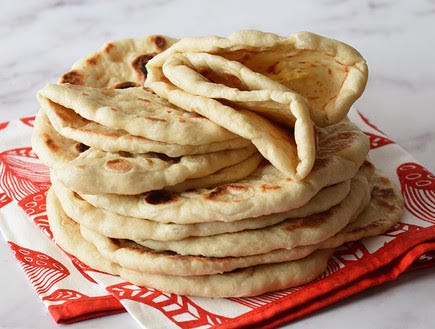
Though traditionally baked in a taboon, you can recreate Saèed Roti at home with this simple, foolproof method. The key is to cook it quickly over high heat, mimicking the intense heat of a stone oven.
Ingredients
4 cups (560 g) bread flour
1 tbsp dry yeast
1 tbsp sugar
1 tsp salt
3 tbsp olive oil
1½ to 2 cups water
Instructions
In a stand mixer bowl, mix the flour with the yeast. Add sugar, salt, olive oil, and 1½ cups of water. Keep the remaining water aside in case needed.
Knead with a dough hook for a few minutes until a soft, flexible dough forms. If the dough is too dry, gradually add more water.
Cover the bowl and let the dough rise for about an hour.
Divide the dough into 8 equal balls (about 120 g each), cover them gently, and let them rest for 10–30 minutes.
Meanwhile, heat a wide pan and lightly grease it with a thin layer of oil (you can use a paper towel dipped in oil to wipe the pan).
Roll out each ball as thin as possible. If the dough resists stretching, let it rest covered on the counter for a few more minutes before trying again.
Place the flattened dough on the heated pan and cook for about 2 minutes per side. Covering the pan during the first stage of cooking helps the bread puff up from the steam.
Repeat with all the dough balls.
Keep the freshly made lafa warm by covering them with a cloth-lined plate—this helps retain moisture and prevents them from drying out.
Help Bring These Stories to Life
The journey of Saèed Roti is just one of hundreds of untold stories of Jewish migration, resilience, and adaptation. Beyond Babylon is a labor of love, but it’s also a time-consuming and expensive undertaking. Research, travel, and documentation require resources.
If you believe in preserving the food traditions and history of the Jewish diaspora, consider supporting this work, so it can see the light of day.
Every contribution helps bring these stories to life.
🔗 [https://gofund.me/e5268add]
Thank you for being part of this journey.
#BeyondBabylon #JewishFood #Bread #FoodMigration #BaghdadiJews #IndianJewishFood #JewishDiaspora #MiddleEasternFood #GoFundMe