
Labu
Meyer`s Jewish Malay lamb curry

It’s been a little while since I posted an essay.
This is because I’ve been researching, testing, and preparing a piece about Aloo Makalla—those turmeric-boiled, deep-fried whole potatoes that jump when pierced with a fork.
I have inadvertently discovered that fish and chips is also a Jewish invention.
More on that coming soon.
But then, something shifted.
An email arrived from Meyer Mussry, an Indonesian-born descendant of Baghdadi Jews now living in Australia.
He sent me a recipe, a family story, and a photograph of a dish called Labu.
And it reminded me why I started this project in the first place.
“I am born of Iraqi Jews on both sides,” Meyer writes. “My paternal grandfather left Iraq in the early 1900s and settled in Indonesia after passing through India. He married there, raised 13 children—including my father.
My mother’s side has similar roots. Her mother—my maternal grandmother—was the sister of my father’s mother. She married a Baghdadi Jew and moved to Basra, where they raised eight children, my mother among them.
One day, my mother wrote to her family in Indonesia. My father replied. They exchanged photographs. He liked what he saw. In 1947, he traveled to Iraq, proposed, and she accepted. They married at the Meyer Synagogue in Singapore in 1948 and had five children.”
In 1958, the family moved to Singapore.
Later, like many Baghdadi Jewish families in Southeast Asia, they resettled in Australia.
“I grew up eating the most incredible food,” Meyer adds. “Iraqi, Indian, Indonesian, Singaporean. My mother was an excellent cook.”
The dish he shared—Labu—is one of those culinary heirlooms: a lamb stew gently simmered with tomatoes, ginger, turmeric.
in Indonesia there are several names of chayote, labu (squash) siam, labu Jepang and manisah in Javanese.
Chayote, also known as christophine, mirliton and choko, is an edible plant belonging to the gourd family.
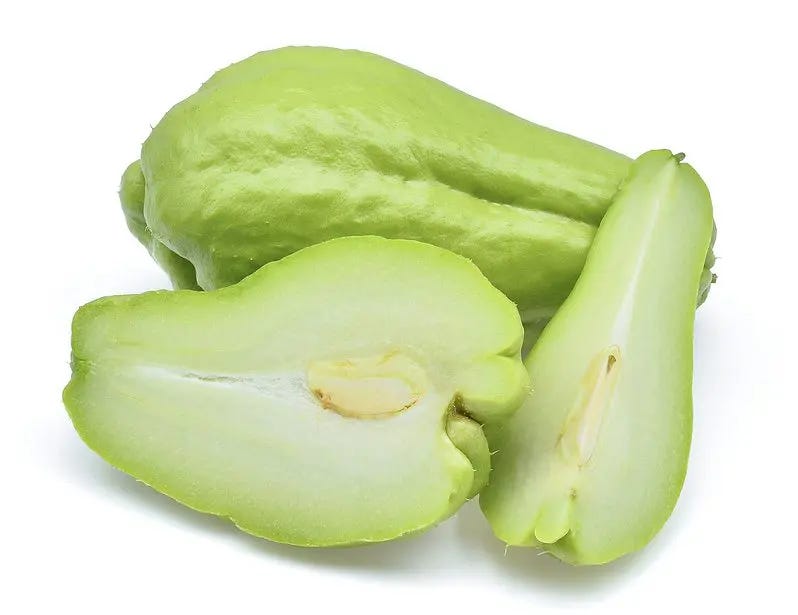
Labu
The chayote fruit is mostly used cooked. When cooked, chayote is usually handled like summer squash; it is generally lightly cooked to retain the crispy consistency.
The way Meyer makes it, this curry is not quite Iraqi. Not quite Indonesian.
Not quite anything—except home.
In Indonesia, labu siam often refers to chayote cooked in coconut milk.
But Meyer’s version has no coconut, no chili heat—just tender lamb, tomatoes balanced with sugar, and vegetables softened off-heat.
A marriage of Middle Eastern depth and Southeast Asian simplicity.
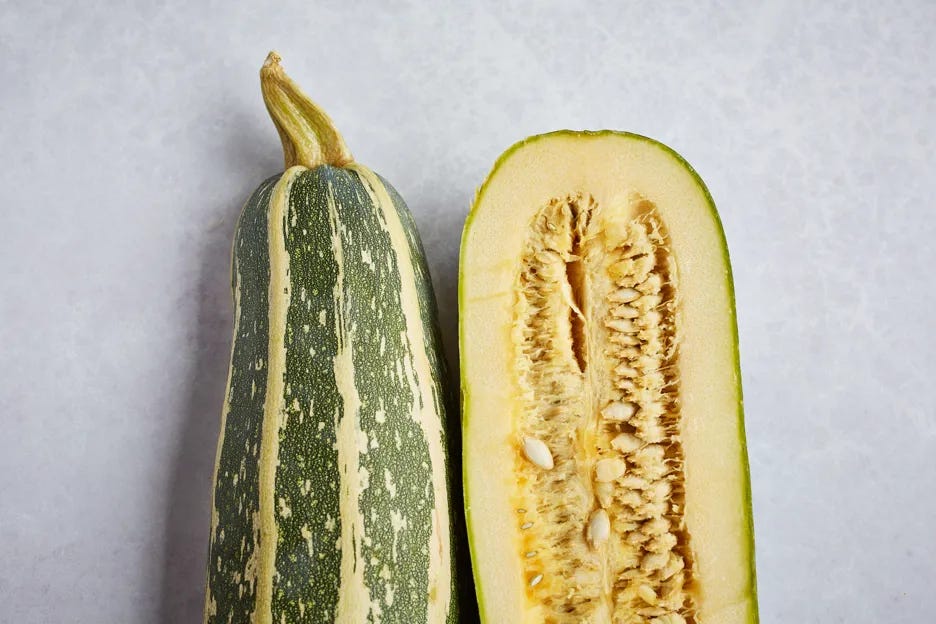
English marrow
And it fits perfectly in Beyond Babylon—a project about how Jewish food remembers what history forgets. How it migrates, bends, substitutes, and survives.
Much like Aloo Makalla, Labu is a dish of patience and resilience. It simmers quietly. It softens slowly. It tells a story.
So before I post the Aloo Makalla recipe, here’s Meyer’s Labu. A family dish. A diaspora dish. A Jewish dish.
🥣 Labu: Indonesian-Jewish Lamb & Choko Stew
Recipe contributed by Meyer Mussry
Serves a family 2–3 times
Ingredients:
1 large onion, chopped
1/2 bulb garlic, grated
1 good-sized knob of ginger, grated
3/4 tsp salt
1/2 tsp black pepper
3/4 tsp turmeric
1 can (400g) diced tomatoes
1 tsp sugar (or to balance acidity)
2 kg diced lamb
4 large chokos (or English marrow), peeled and diced
Extra virgin olive oil
Instructions:
In a deep pan, heat olive oil over medium-high. Sear the lamb, stirring to avoid burning.
Add chopped onion, salt, and pepper. Cover and let stew for 5–10 minutes until bubbling.
Add garlic, ginger, turmeric, and canned tomatoes. Stir well and sprinkle in the sugar.
Simmer for at least 10 minutes until the lamb is tender and sauce develops depth.
Add diced choko (or marrow) and bring the mixture to a gentle bubble.
Turn off the heat and let the dish rest—the choko will soften as it cools.
Serve warm with steamed rice.
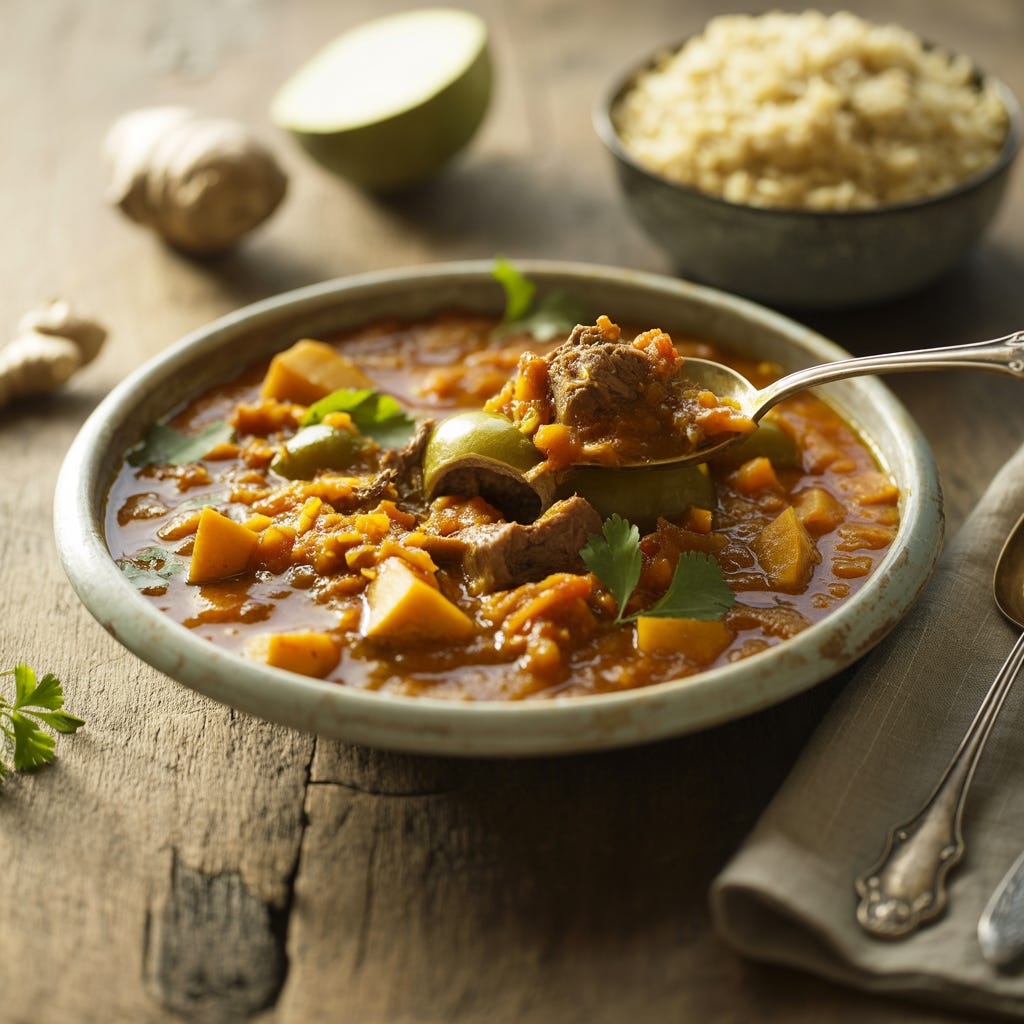
📥 Click here to download the PDF recipe card
Labu - Indonesian chayote lamb curry
To me, dishes like this aren’t side notes in Jewish history. They’re the history. Quiet vessels of memory, identity, and movement.
Thank you, Meyer, for sharing your family story. And thank you, reader, for making space for it.
Aloo Makalla next.
Until then—
We were here.
We mattered.
We cooked.
Interesting! Did you know that chayotes are original to Mesoamerica, particularly central Mexico and parts of Central America? They were cultivated by the Aztecs and Mayans and were a staple food for these ancient civilizations. The chayote plant, a climbing vine, was then introduced to the Caribbean, and South America. Following the Spanish conquest of the Aztec Empire, chayote, along with other crops, was introduced to Europe, and later to Africa, Asia, and Australia.
In Peru, chayotes are known as "calabacita china" (roughly translated as, little Chinese squash). It's not a typical ingredient of Peruvian cuisine, but it's readily available in grocery stores and farmers' markets. Growing up at home, my mom would make this sort of simple stir-fry/stew that we all loved, and which probably came via my Turkish grandmother. It took me a while to find chayotes in the US (because I didn't know what they were called here), and when I finally did, my younger brother and I put together our heads to reproduce my mom's recipe! 😊