
🍝 Kima Across Empires
A Minced-Meat Migration

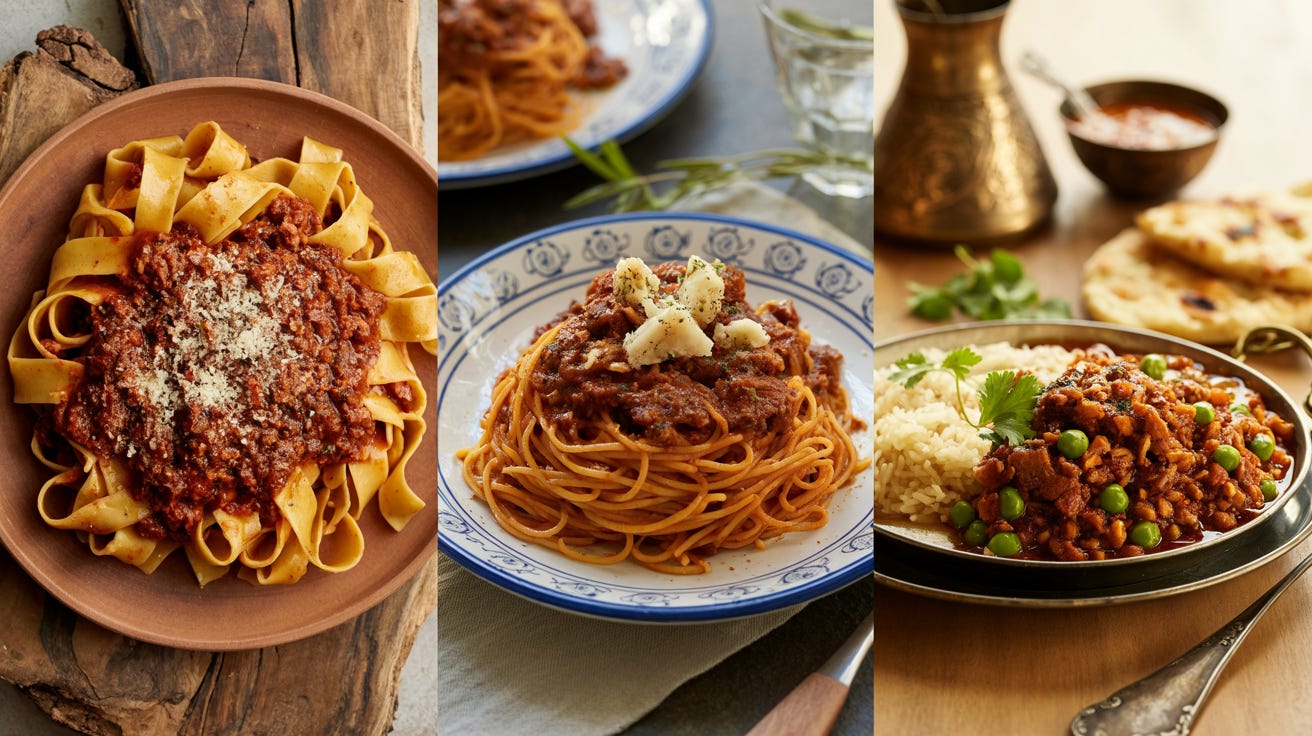
A Facebook post about Greek food caught my eye recently. Someone posted something called makaronia me kimá which I had never heard of. It looked a lot like a ragù alla bolognese but was unmistakably Greek: spiced with cinnamon and clove, sweet with tomato, and rich enough to suggest a moussaka tossed with pasta.
I kept the recipe, even made it recently, and it’s a keeper — but that word — kimá — struck a chord. I knew it from somewhere else: keema, the Indian minced-meat curry of my own heritage, cooked dry with garam masala, peas, or potatoes. Could it be that the Greek kimá and Indian keema were related?
They are. And their journey tells a story that crosses empires.
🕰️ 1. A Word with Passports
The Greek kimás (κιμάς) comes directly from the Turkish kıyma, meaning minced meat.
Turkish, in turn, shares culinary ancestry with Persian and Arabic kitchens — where spiced mince became a building block of countless dishes from kofta to keema. But kimá didn’t stop at the Aegean. Like so many travelers before it, it crossed oceans.
In America, Greek immigrants brought makaronia me kimá with them — a humble yet aromatic pasta with spiced meat sauce that, stripped of its béchamel and layered form, became something like a deconstructed pastitsio. In kosher homes, where dairy and meat couldn’t mix, this adaptation felt almost inevitable.
Over time, this Greek comfort food found an unlikely new life on the banks of the Ohio River. When Greek men found work in American diners and “chili parlors,” they fused their homeland’s kimá with local tastes and ingredients. The result was Cincinnati chili — a regional specialty that still carries the imprint of the Greek kitchen. Served “one-way,” “two-way,” or “three-way,” it layers spaghetti, spiced meat sauce, grated cheese, and sometimes onions or beans — a diaspora echo of makaronia me kimá reinvented as Americana.
As folklorist Tim Lloyd has documented, this chili wasn’t born from Texas cowboy culture but from immigrant pragmatism: a Greek adaptation of Ottoman flavours to Midwestern palates. It’s yet another reminder that culinary migration doesn’t only move east to west — it loops, adapts, and reinvents itself wherever people seek both work and belonging.
So when you eat makaronia me kimá in Athens or keema matar in Calcutta, you’re tasting two cousins — dishes that diverged centuries ago from the same Persian ancestor.
From there, the word moved like a merchant — west into Italy and the Balkans with the Ottomans, who had borrowed it from Persian qīma — the same root that traveled eastward into Mughal India, where it became keema in Hindi and Urdu. Then east into India with the Persianized Mughal. Both directions led to homes where ground meat became the great equalizer — transforming scraps into sustenance, necessity into art.
🏛️ 2. The Ottoman Highway
The Ottoman Empire was a single, sprawling kitchen. From Istanbul to Baghdad, Aleppo to Thessaloniki, cooks shared techniques, manuscripts, and vocabulary: dolma, pilav, börek, kıyma.
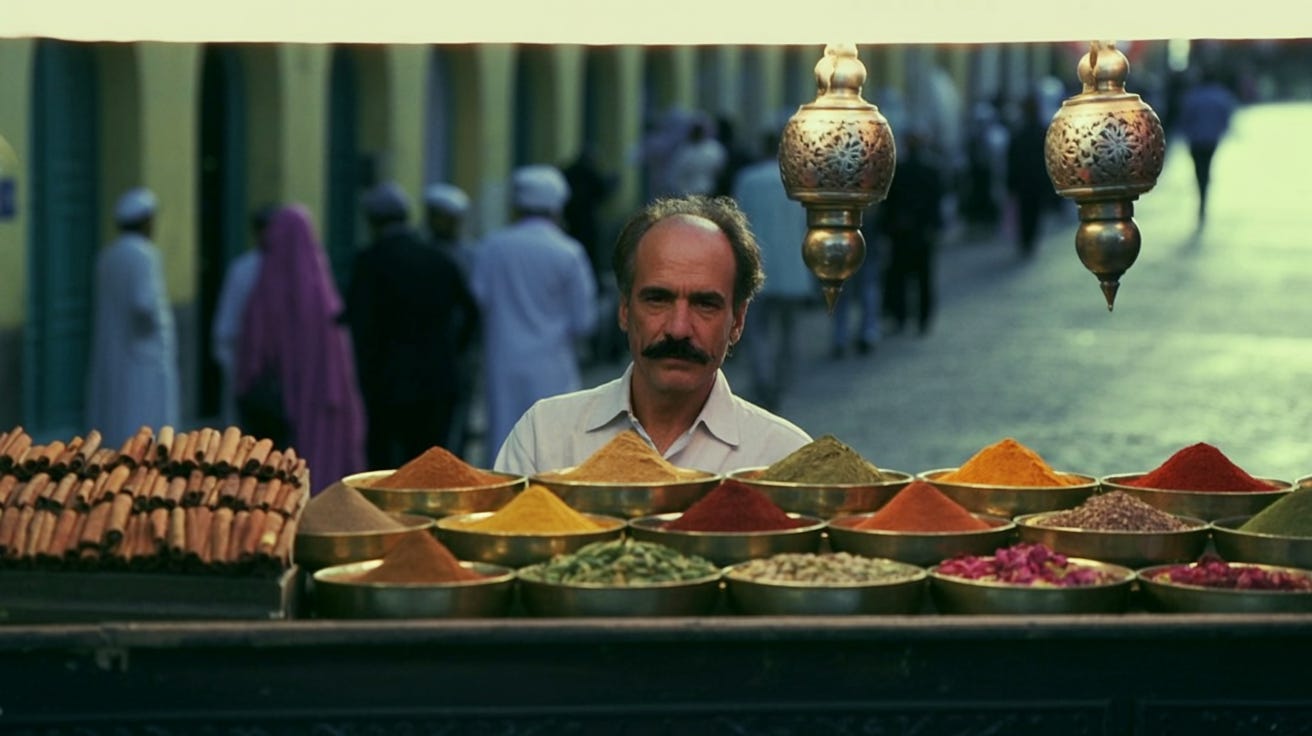
When the Ottomans conquered Greece in the 15th century, they carried their culinary lexicon with them. Greek cooks adopted kıyma and turned it into kimás. Over time, it found its way into every Greek home and taverna: makaronia me kimá, moussaka, pastitsio, soutzoukákia Smyrneika.
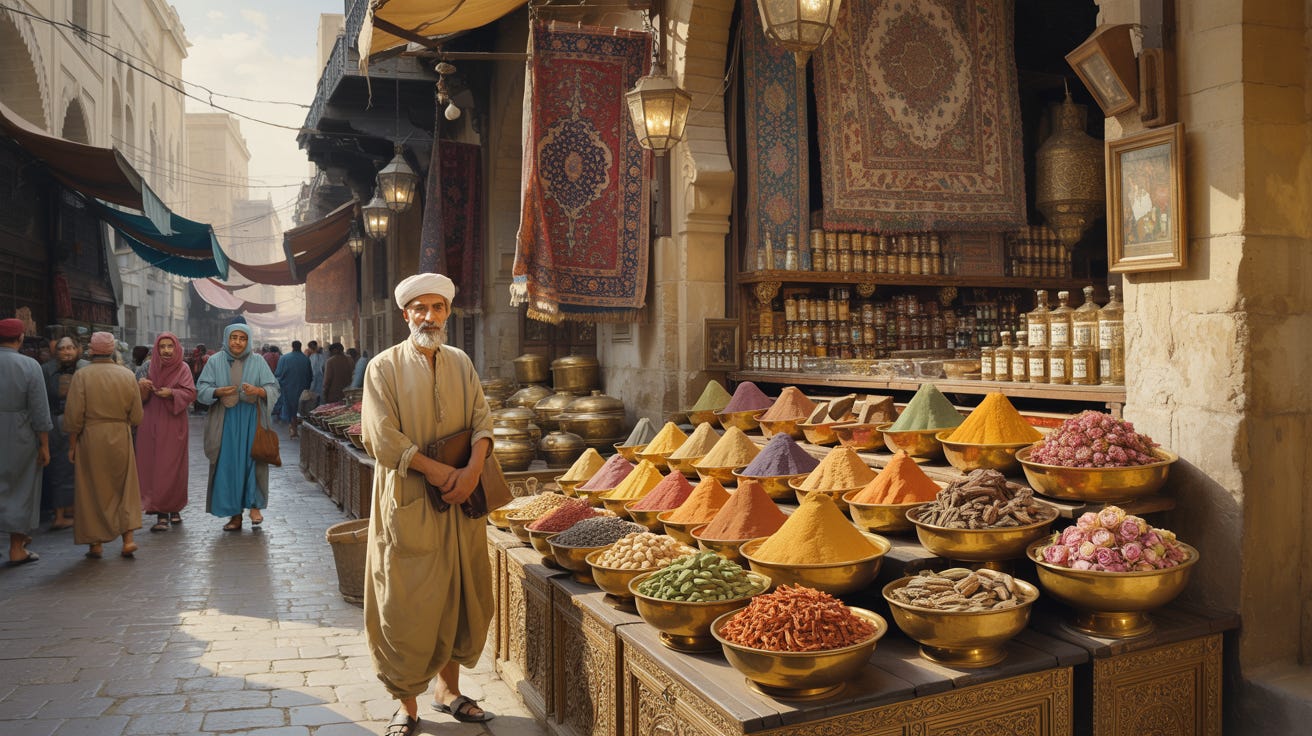
Meanwhile, the same Persian-Turkic qīma moved east through Central Asia into India, meeting turmeric, ginger, and chili to become keema — a distant relative with new spices and soul.
⚓ 3. The Venetian and Italian Echo
Venice’s ships were the spice arteries of the Mediterranean. From the 13th to the 17th century, its merchants brought cinnamon, nutmeg, pepper, cloves, and saffron from the Levant and beyond. These ingredients didn’t just perfume Italian cooking — they changed it.
Before the tomato arrived from the Americas, medieval and early Renaissance meat sauces in Italy were already scented with the same “sweet” spices we now associate with the East. Venetian merchants had been exposed to the luxurious Ottoman palate on Crete, Cyprus, and in the Aegean — territories the Republic ruled for centuries.
The flow of ideas went both ways: Venice absorbed Ottoman opulence, and Ottoman cooks borrowed European refinement.
That is why when the tomato finally entered the Mediterranean pantry, both Italian ragù and Greek kimás were already primed for it. The structure — ground meat slowly stewed in fat, wine, and spice — was common across the region. What changed was emphasis:
In Italy, the tomato softened and sweetened the sauce, creating the slow-cooked ragù alla bolognese — a dish of patience, silkiness, and bourgeois restraint.
It’s worth noting that the original ragù alla bolognese — as codified in Bologna — contains only a modest amount of tomato, often just a spoonful of concentrate for color and acidity. The tomato-heavy versions familiar to most of us today are an American evolution of the sauce, shaped by abundance and adaptation.
In Greece, under Ottoman influence, the same base took on cinnamon, bay leaf, and clove — spices once traded through Venetian hands — becoming makaronia me kimá, fragrant and slightly exotic, the Levant meeting Liguria over a plate of pasta.
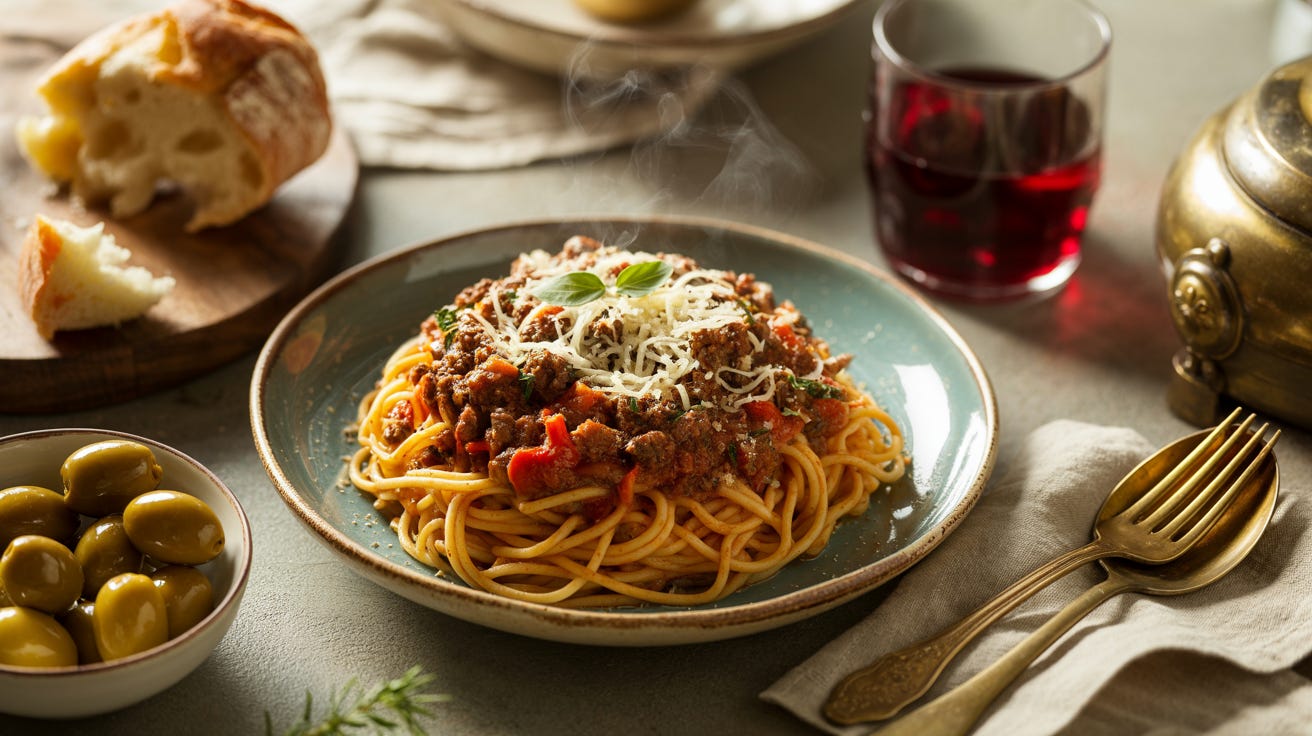
The two dishes are culinary twins raised in different households. One grew up in Bologna, the other in Smyrna — but both trace their bloodline to the same Mediterranean table, where spice met meat, and empire met appetite.
Makaronia me kimá tastes like ragù alla bolognese dreamed in Turkish — a dish imagined in the language of empire, flavoured by centuries of trade, and perfected in the intimacy of the home kitchen.
🍝 3½. Bologna: The Western Cousin
By the time minced meat reached Bologna, it had shed its eastern perfume but not its philosophy.
The method remained the same — slow cooking, patient layering, the transformation of modest meat into something silken and profound.
In ragù alla bolognese, tomatoes replaced dried fruit, wine replaced spice, and restraint replaced exuberance — yet the soul was the same.
Both keema and ragù are children of thrift and comfort: one perfumed with cardamom, the other mellowed with milk.
If keema is the sound of a bazaar at dusk, ragù is the hush of an Italian kitchen at noon — two dialects of the same culinary language.
🕎 4. The Jewish Connection
For Sephardi Jews of Salonika, Izmir, and Rhodes, kimás became part of the Shabbat repertoire: minced beef or lamb with tomato, cinnamon, and bay leaf. These warm, tomato-laced meat dishes—whether served as a saucy stew over rice, tucked into flaky pastries, or shaped into spiced meatballs—reflected the shared culinary DNA of the Ottoman Sephardic world. In Salonika, ground meat (karne molida) featured in keftikas, sometimes enriched with leeks or spinach and served warm on Friday nights. In Izmir, a slow-cooked Sabbath stew known as avikas combined beef, white beans, tomato paste, and sweet spices, simmered overnight for Shabbat lunch. And on the island of Rhodes, while roast chicken was the Friday night centerpiece, kimás found its way into pastelikos—savory pies filled with spiced meat, served during the Sabbath day vijita visits.
What united these dishes wasn’t just technique, but intention: making do with what was available while elevating it with spice, memory, and meaning. In all three communities, kimás was more than a meat sauce—it was a warm, fragrant echo of Iberian exile, Ottoman hospitality, and Sabbath joy.
In each culture, the logic of minced meat evolved differently.
In Persia and the Mughal world, meat was minced to absorb spice and stretch abundance — the cuisine of the mortar and pestle.
In Italy, by contrast, mincing emerged from the craft of the butcher: a way to bind fat and lean for sausages and salumi, and later, to build ragùs rich in texture.
One was born of perfume and preservation, the other of patience and fat — different instincts leading to the same act of transformation.
When Baghdadi Jews left Iraq for India, they brought with them the love of spiced meats — but keema, as a distinct dish and word, was something they embraced in India. In Calcutta, beef or chicken replaced lamb, oil replaced ghee, and heat softened into fragrance. It was Muslim by origin, Jewish by adaptation, Indian by temperament — a true dish of the diaspora.
🥟 5. Kima Encased: The Art of Containment
Across the Middle East and South Asia, cooks found countless ways to shape or enclose seasoned minced meat.
Among Baghdadi Jews, kima could appear inside sambousak, pressed between potatoes in charp, or mixed with bulgur in forms resembling kibbeh.
These weren’t direct descendants of a single dish but parallel expressions of the same idea: flavour contained, texture contrasted, sustenance extended.
Encasing or layering meat with starch or grain made it last longer, travel further, and feed more people — a quiet practicality that became tradition.
Each filled pastry or patty reflects the same enduring impulse: to carry nourishment, memory, and ingenuity together.
🌍 6. A Family of Flavours
Across cultures and centuries, the idea of spiced minced meat travelled — from Persia’s qīma to India’s keema, from Ottoman kitchens to Greek tavernas and Jewish homes.
Each version tells a story of adaptation, trade, and taste.
Persia — qīma
Minced lamb, onions, split peas, lime
Aromatic, subtle
Ottoman Turkey — kıyma
Lamb, tomato, allspice
Savoury, stewed
Greece — kimás
Beef or lamb, tomato, cinnamon
Mediterranean ragù
Italy — ragù alla bolognese
Beef and pork, tomato, wine, milk
Slow-cooked, silken, and restrained
India — keema
Mutton or chicken, garam masala, peas
Fragrant, dry curry
🍛 7. Recipes
🍲 Keema kari (Indian Minced Meat with Tomatoes, Peas & Potatoes)
This version sits between a Mughal keema and a ragù alla bolognese. Adapted from Copeland Marks’ The Varied Kitchens of India (p. 118), with nods to the Baghdadi-Jewish style found in Mavis Hyman’s Indian-Jewish Cooking, it softens the heat and adds tomato depth, making it as much a family stew as a spice-forward curry.
Ingredients:
Oil: 5 tbsp
Bay leaf: 1
Cinnamon stick: 1 small
2 onions, chopped
4 garlic cloves, chopped
1 tbsp ginger, grated
500g minced lamb or beef
1 tsp each: cumin, coriander, paprika
½ tsp chili flakes (optional)
¼ tsp turmeric
3 tomatoes, chopped
1 tbsp tomato paste
Salt and pepper to taste
1½ cups water or stock
1 potato, diced
1 cup peas
2 tbsp yogurt or cream (optional)
Coriander (or parsley), to serve
Method: Sauté aromatics, brown meat, bloom spices, add tomatoes and liquid. Simmer with potatoes and peas. Finish with yogurt and herbs. Serve warm with rice, zalata, dal and mango pickle.
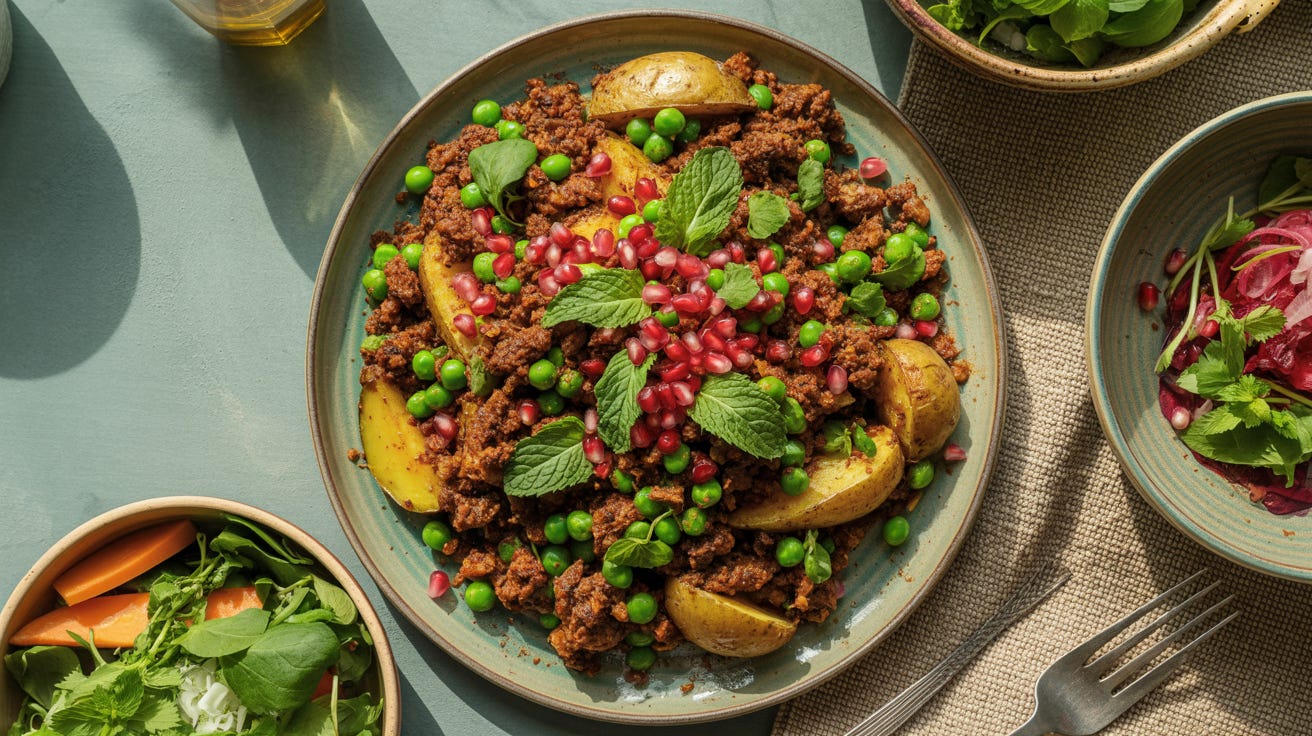
👉 Download a printable version of this recipe here
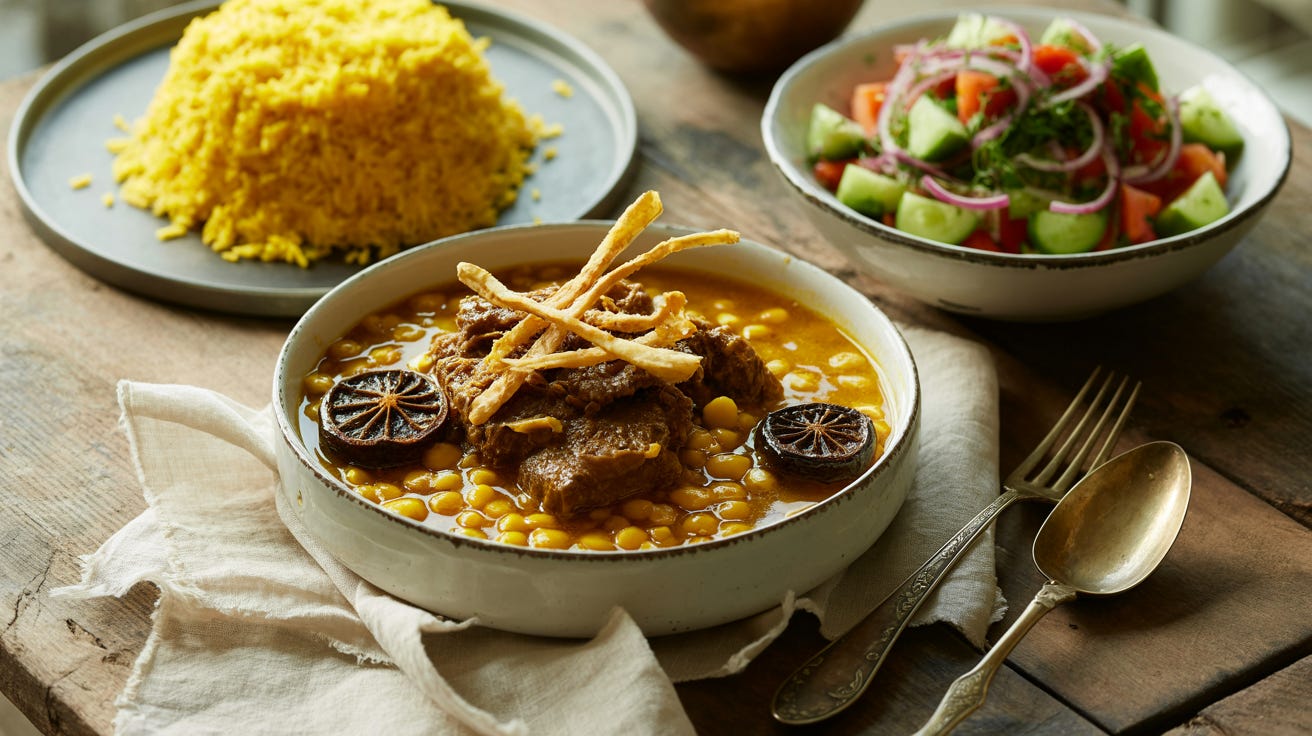
🍋 Khoresh Gheymeh (Persian Stew of Meat and Split Peas)
The cousin from Iran — soft meat, saffron, and limoo ammani.
Key Ingredients:
Lamb or beef cubes, lappeh (yellow split peas)
Tomato paste, turmeric, cinnamon stick
Limoo ammani (or lemon juice)
Matchstick fried potatoes on top
Method Summary: Cook onions, spices, meat. Add tomato paste and limoo. Parcook split peas. Combine and simmer until tender. Top with fried potatoes. Serve with saffron basmati rice and a Shirazi salad.
🕯️ 8. Epilogue — Memory in Mince
Every culture has its comfort food — meat, tomato, spice, starch. But keema reminds us that comfort itself is a migrant. The same minced meat that simmered in an Ottoman pan found its way to both Calcutta and Crete, Baghdad and Thessaloniki.
Whether minced meat entered the European kitchen through Persian influence, Italian sausage-making, or both, what matters is how cooks everywhere recognized its potential — a technique that transcended empire, faith, and geography.
When I taste makaronia me kimá, I taste empire, exile, and inheritance. And when I cook keema, I remember that what unites us isn’t the recipe — it’s the hunger that travels.
✨ All posts are free; paid subscriptions are optional, and your support is deeply appreciated.
💬 Share your story in the comments, or pass this essay along to a friend.
📖 To support more work uncovering Jewish food in unexpected corners of the world, consider subscribing to Beyond Babylon.
What a grand journey on a migratory route of one type of food.
Very interesting. Would kima have been a special occasion dish? I can't imagine that most people had the resources to eat meat very often.