
Haneed
The Yemenite Jewish Curry Worth Waiting For

I’m sure you all remember my search for the ultimate Yemenite Jewish curry — and the promise I received from the expert, Moshe David.
Well, he kept his promise. Today I can finally share the dish that ties Yemen’s highlands, the Arabian desert, and the Indian Ocean into one fragrant pot: Haneed.
This slow-roasted lamb, seasoned with Yemeni hawaij and touched with Indian curry powder, is more than dinner. It’s a passport stamped across centuries of trade, migration, and adaptation. Every bite is a map of migration — of where people traveled, and what they carried with them.
From the Highlands of San‘a to the Indian Ocean
Haneed (also spelled Haneeth or Hanith) was born in Yemen, a land where spice caravans crossed mountain passes and ports like Aden bustled with Gujarati traders. Lamb and goat were slow-cooked until the meat yielded to the touch. Seasoning was simple but profound: hawaij for fragrance, salt for purity, and in the south, a pinch of Indian curry powder brought by migrants who worked in Aden’s docks and shops.
Those of you who read my earlier Yemen essays will recall that hawaij (“mixture”) isn’t one recipe but a family of blends: one for soup and stews (turmeric-based), another for coffee (cardamom-forward). For Haneed, we use the soup/stew blend — earthy, golden, and deeply aromatic.
The Indian presence in Yemen long predates Islam. Ships rode the monsoon winds between Gujarat and Aden, carrying pepper, cardamom, and cloth. These exchanges shaped the lives of Yemen’s Jews as well. In Aden, Jewish women adapted saris into local styles; Jewish tables added curry’s extra turmeric and heat. Haneed became a dish where two spice routes met.
Jews of Yemen: Between Hadhramaut and Habban
The City of Habban 2024 (long after the Jews left) courtesy The Museum of the Heritage of Habban Jews (6:04 minutes)
Jews of Hadhramaut and Habban
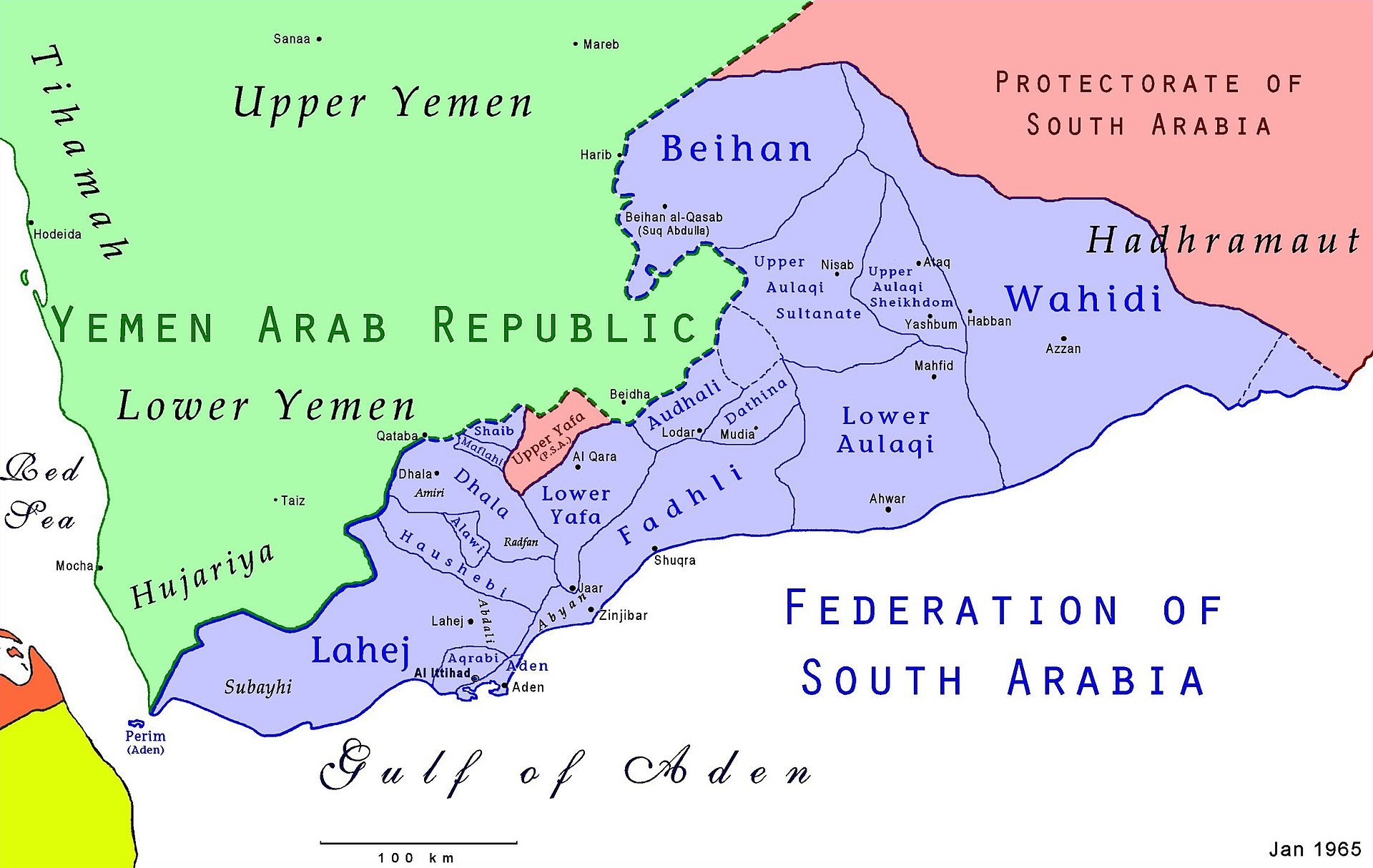
Moshe David’s version of Haneed comes from Beihan, in Yemen’s Hadhramaut region. Jews in Hadhramaut and nearby Habban lived at Arabia’s crossroads, between India and Africa. Their communities were small but distinctive, preserving unique prayer melodies, jewelry traditions, and even colourful striped garments for men and sari-influenced dresses for women.
A 1965 map of South Arabia, just before the British withdrawal from Aden, shows the fractured mosaic of the region — [Wikimedia Commons]. It was in this mosaic that Yemen’s Jews lived, often caught between feuding tribes and shifting empires. Yet they carried something enduring: the flavours of their kitchens.
Among those flavours was hawaij. To Yemenite Jews it was more than seasoning; it was survival and memory, a taste of home carried into exile.
Yemen: Land of Tribes and Crossroads of Empires
Yemen has never been a single story. It’s a land cobbled together from feuding tribes, their rivalries often exploited by outsiders — from the Ottomans to the British, even Lawrence of Arabia. The Jews of Yemen were often caught in the crossfire, victims of violence, yet they carried something precious with them: the flavours of their kitchens.
Between India and Arabia
Among Yemen’s Jewish communities, the Jews of Ḥabbān stood apart. Their distinctiveness lay not only in geography—tucked away in Hadhramaut, near the ancient incense routes—but also in their striking outward appearance.
Though small in number, Jews in Hadhramaut were skilled craftsmen, silversmiths, and merchants on the incense and spice trade routes that once connected Arabia to India.
In Ḥabbān and Hadhramaut, Jewish women wore garments influenced by Indian saris, adapted into local “Yemenized” styles, while men were recognized for their long hair and colorful striped wraps. Their relative isolation preserved older traditions: unique prayer melodies, distinctive jewelry, and festive rituals such as elaborate henna ceremonies for both bride and groom.
Men typically wore beards without mustaches and kept their hair long. They wrapped the lower part of their bodies in striped or checkered cloth, fastened at the waist with a belt. On their upper bodies, they wore checkered or striped shirts—or sometimes a plain one—with a white turban on their heads. Garments were often dyed a deep indigo, a color considered both dignified and important. Over their shoulders they draped a large prayer shawl made of delicate, colored fabric. Contemporary accounts described the Ḥabbān Jews as taller and more muscular than their Muslim neighbors.
The women wore wide dresses with the back hem longer than the front. Their hair was braided into many plaits and covered with a scarf known as a shuweika.
Both men and women adorned themselves with rings set with gemstones, while women also wore pure silver necklaces. The number of necklaces varied from woman to woman, reflecting the wealth of her family and husband.
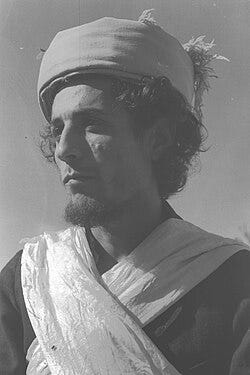
Photo: A new Jewish immigrant from Beihan, Palestine, 1946. Israeli National Photo Collection.)



How much effort goes into this wedding dress… (credit: urbanbridesmag.co.il)
Side Recipe: Hawaij (Soup & Stew Blend)
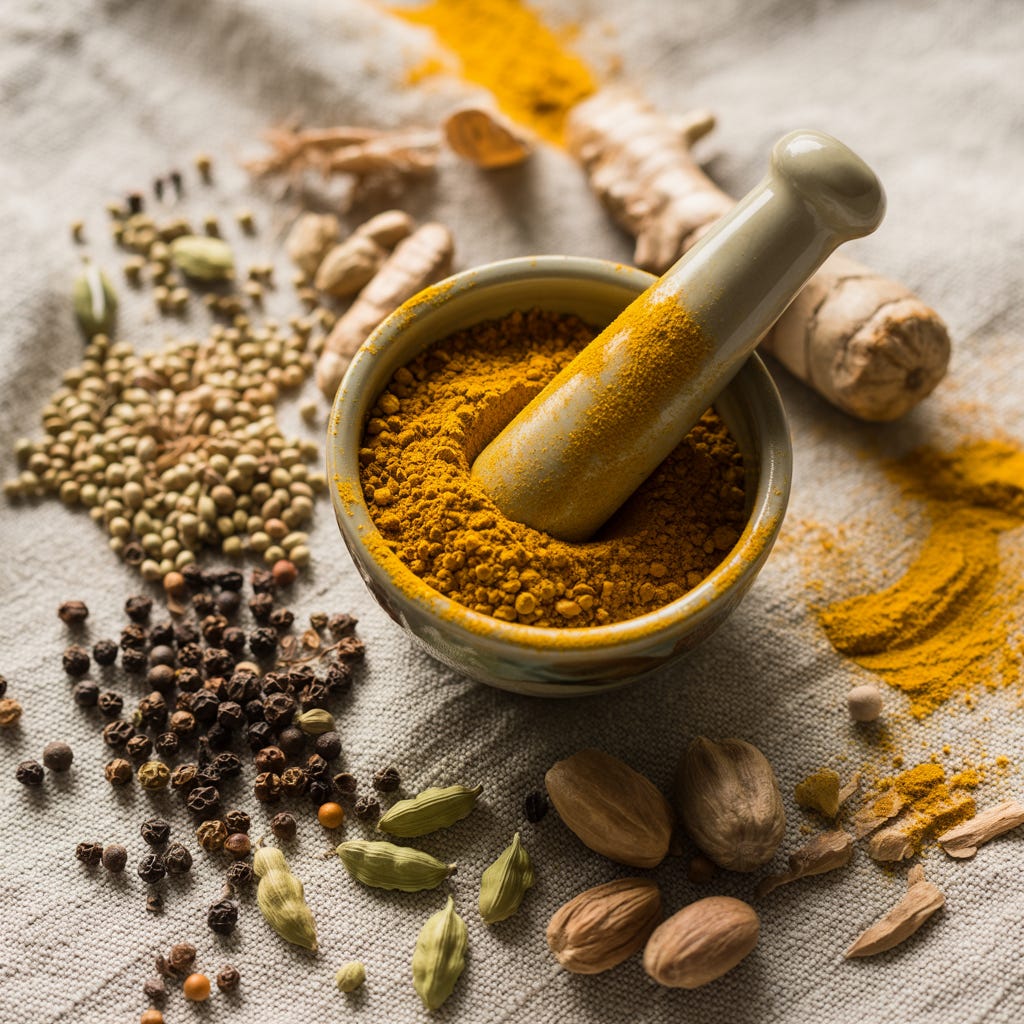
The food of the region reflected the cultural exchanges — aromatic with turmeric, cumin, black pepper, and hawaij, the Yemeni spice blend shaped by trade across the Indian Ocean.
Here`s how to make hawaij yourself:
Yields about 1 cup
2 cardamom pods
2 cloves
1 tbsp black peppercorns
2 tbsp cumin seeds
1 tsp coriander seeds
¼ tsp grated nutmeg
½ cup turmeric (or slightly less, to taste)
Crack cardamom pods; discard husks.
Grind with cloves, pepper, cumin, and coriander until coarse.
Stir in nutmeg and turmeric.
Store in a glass jar in fridge or freezer — keeps for months.
Serving Suggestion:
Sprinkle hawaij into lentil soup, use it in the Haneed we will soon prepare, or add it to roasted vegetables. For a true taste of Aden, stir it into hot broth with a spoon of hilbeh (fenugreek dip) — the way Yemenite Jews still do on Shabbat.
It’s in this world Haneed was born: lamb slow-roasted in sealed pots, perfumed with Indian and Arabian spices, served with rice or flatbreads, and often accompanied by hilbeh, the fenugreek dip that is a Yemeni Jewish signature.
Haneed: The Jewish Kitchen’s Version
In Jewish Adeni homes, Haneed became part of the festive repertoire. On Friday mornings, the butcher’s parcel of lamb would be rubbed with oil and spices, nestled with tomatoes and onions, sealed in a heavy pot, and left to roast slowly while other dishes — lachuch spongy pancakes, hilbeh fenugreek dip — were prepared. By nightfall, the meat was soft enough to pull apart with a spoon.
For Yemenite food archivist Moshe David, whose family left Yemen decades ago, Haneed is a bridge between worlds. His version leans into both heritages — the earthy cumin, black pepper, and turmeric of hawaij, and the layered warmth of Indian curry powder. It’s the taste of two spice routes meeting in one pot.
Haneed’s close cousin, Mandi, uses a sealed underground oven (taboon) for a deep, smoky taste. Haneed, by contrast, is roasted in a clay oven (tannour) or a sealed pot, which keeps the meat tender and aromatic without too much smokiness.
If Mandi is the rugged outdoorsman of Yemeni cooking, Haneed is the poet — fragrant, nuanced, quietly powerful.
A Modern Recipe for Haneed
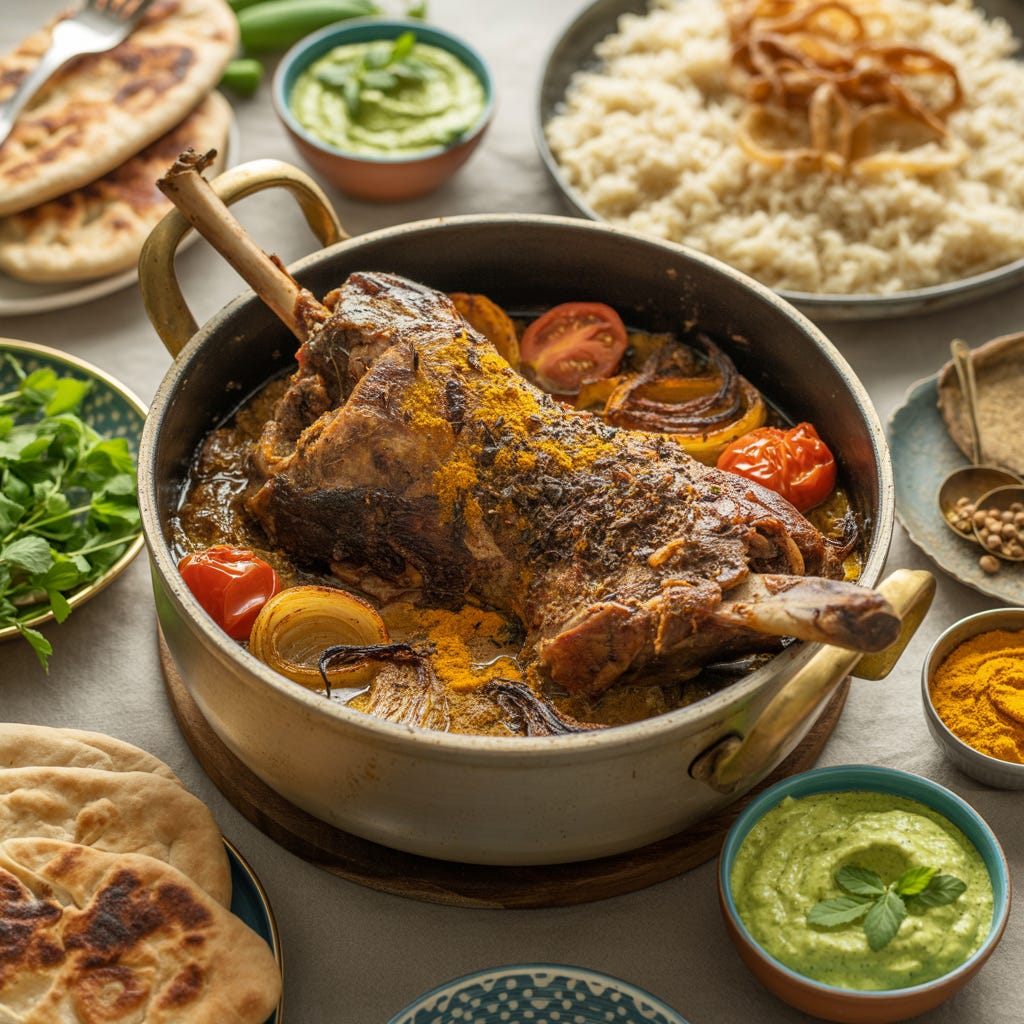
This recipe is adapted for the home kitchen, where few of us have access to underground clay ovens. It preserves the essence: spice, patience, and heat.
Serves 6–8 | Active roasting: 1½ hours
Ingredients
1.8 kg lamb shoulder or leg, cut in large chunks
1 tbsp ground cumin
1 tbsp curry powder
½ tbsp black pepper
½ tbsp turmeric
½ tbsp hawaij
1 tbsp olive oil
½ tsp chili powder (optional)
1 tomato, diced
2 onions, sliced
3 garlic cloves, minced
Salt to taste
Method
Preheat oven to 230°C / 450°F.
Rub lamb with oil + half the spices.
Place in a heavy lidded pot.
Toss onions, tomato, and garlic with remaining spices; arrange around the meat.
Season, cover tightly, and seal.
Roast 1½ hours until tender enough to pull apart with a spoon.
Serve hot with basmati rice or flatbread, and — for a true Yemeni table — hilbeh on the side.
Cook’s Notes
Substitutes: goat or beef short ribs.
Shortcut: pressure-cook for 40 min, then finish uncovered in the oven.
Shabbat hack: pre-sear, then keep in a warming oven.
Fire, Memory, Continuity
Every time you cook Haneed, you taste the journeys inside it: shepherds on Yemen’s highlands, Gujarati sailors landing in Aden, Jewish families stirring curry into their Sabbath meal. Their clothes, songs, and rituals may have been distinct, their lives marked by hardship and displacement, but their food carried continuity.
Every bite is both history and present: the taste of exile, the fragrance of trade winds, and the resilience of memory. Like the Jews who carried it, Haneed travels well — never standing still, yet always tasting like home.
And yes — the promise was worth the wait.
Shabbat Shalom.
Great idea we have one in the area!!
I have his book! I loved learning about distant areas and forgotten dishes from Yemen. If you dont have it I really recommend
Ive seen from contradicting sources that they did exist but in only small parts of Yemen. So ive yet to make up my minf about that but who cares as long as we have Jachnun in the world
Fascinating! I always feel that we reduce Yemenite cuisine to jachnun and kubana so im so excited to see a recipe from there that also shows the impact of the spice route. Looks delicious will definitely make this soon for Shabbat (as soon as i can get my hands on hilbe here in NJ).
Also, I have a two episodes on Jewish Yemenite food in my podcast (in Hebrew) called Divrei Taam if you're interested!
https://open.spotify.com/episode/6u1DE4WGXo2WBeCi8cSG0F?si=-_egsF3OTGiuJlJyAhM0zQ