
🥔 Aloo Makala
The Ancient Jewish Potato Chip, Now Done the TikTok Way

Who would have thought that at 65 years old, doing TikTok videos would become a necessary life skill?
But here we are — peeling potatoes, filming in vertical, and unearthing Jewish food history one crisp fry at a time.
Let’s get one thing straight: not all fries are created equal.
You’ve had French fries — crisp, thin, usually industrial. Even “home” fries today often arrive frozen in a bag, pre-cut and pre-salted by someone you’ll never meet.
You’ve had British chips — thicker, wrapped in newspaper, soaked in malt vinegar.
But have you ever had Whole Fries?
Not wedges. Not matchsticks. Not mash.
I’m talking about Aloo Makalla — whole, peeled potatoes slow-fried in oil until they crackle, crisp, and hum with turmeric. A dish passed down in Baghdadi Jewish kitchens, always just in time for Shabbat.
And they`re so good. Mavis Hyman in her book Jewish Indian Cooking says that in many households, extra aloo makallas were cooked on Fridays to provide salads for lunch on Saturdays.
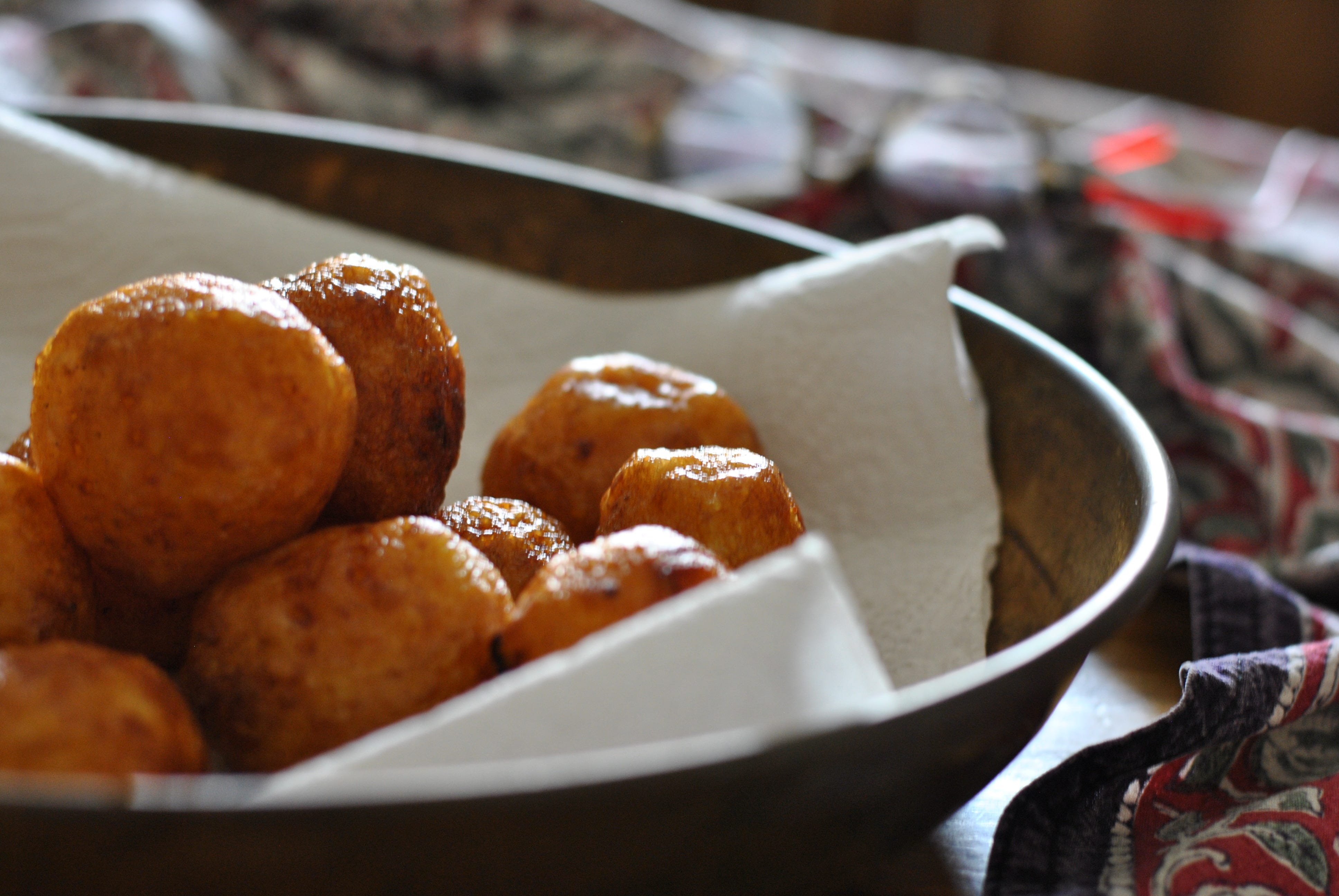
I wrote about them last March (jumping potatoes), but now we’re doing it the TikTok way.
🔥 How They’re Made
You don’t slice. You don’t mash. You can double-fry — but that’s entirely optional.
Start with yellow potatoes — waxy, not too starchy.
Peel them.
Parboil them in salted turmeric water with a pinch of baking soda. That gives them their golden hue and a head start toward tenderness.
Then, slow-fry them. Patiently. In shallow oil. Turn them gently. Let them take their time.
And then — twenty minutes before Shabbat — you crank the heat. That final sizzle gives them their crisp outer shell.
Inside? Soft. Outside? Golden.
You tap them with your fork — and when you get that hollow, wooden sound? They’re ready.
🍋 What to Serve Them With?
Traditionally: hulba — a sharp, lemony fenugreek dip that cuts through the oil like a squeeze of citrus. Love it, its vegan too, but go explain it to someone who is not familiar with the genre.
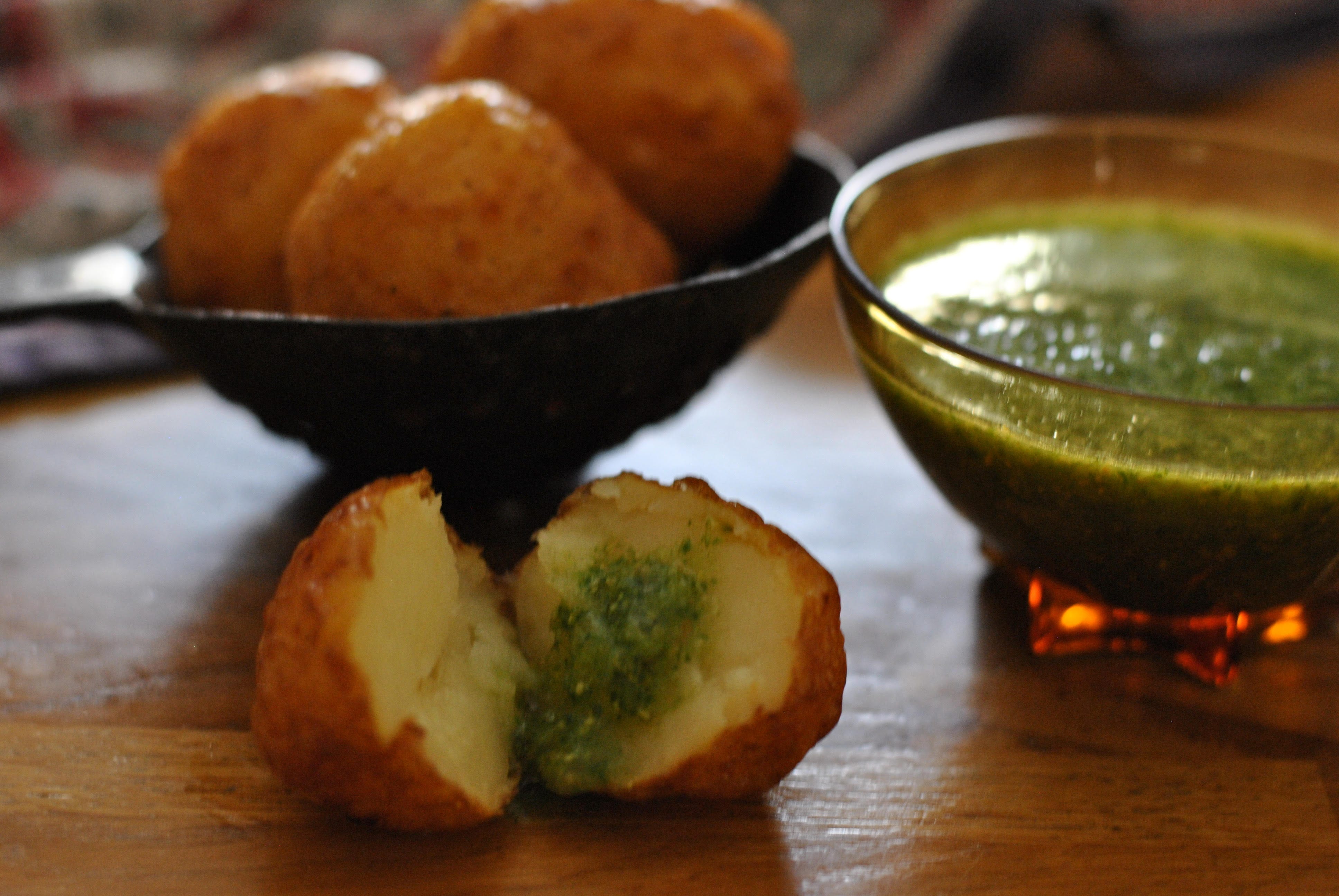
And I wanted a modern dipping sauce.
So I looked around. How do people eat fries around the world?
French fries — like migration — have gone global. And wherever they go, sauces follow, collecting spice memories.
Belgium: Andalouse (mayo + tomato + roasted pepper), Samurai (spicy chili mayo), Curry Ketchup.
France: Aioli, Remoulade, Gribiche.
The Netherlands: Satay sauce, Joppiesaus, Fritessaus.
Germany: Pommes Rot-Weiss (mayo + ketchup), Currywurst sauce, Senf (mustard).
USA: Ranch, Fry Sauce (mayo + ketchup + pickle brine), Cheese sauce.
Japan: Wasabi mayo, Kewpie + soy.
And then there’s our twist:
Amba Mayo — the Iraqi-Israeli answer to fry sauce.
You’ve seen me teach amba, the mango pickle of Jewish Iraq.
Now we blend it with mayo. Funky. Fruity. Fiery. It sings with Aloo Makalla.
Feeling inspired? Invent your own:
Yogurt + garlic + lemon → a Levantine lift.
Tahini + chili → creamy heat.
Hulba aioli? You bet.
🌍 Where Did These Jewish Fries Come From?
Not Iraq. You won’t find them in Baghdad.
Not India either — and certainly not outside Jewish homes.
It’s a diasporic invention, forged somewhere between memory and necessity. A food of exile, made by hand.
The name tells a story:
Aloo — Hindi for potato.
Makalla — likely from Arabic maqla, to fry.
Jewish cooks from Baghdad, resettled in colonial India, brought with them language, ritual — and this dish.
Turmeric. Timing. Tenderness. Fried just before sundown.
🍟 Meanwhile, in 1860s London…
A similar Jewish story. But this one made history.
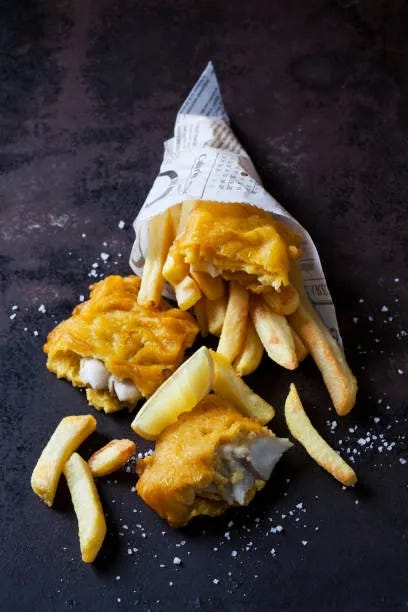
Joseph Malin, a teenager in East London, opened a fish and chip shop.
Fried fish was already a Jewish tradition — pescado frito, eaten cold on Shabbat by Sephardic Jews fleeing the Inquisition.
But Malin added chips.
The combo stuck. Fish and chips fed a nation.
His shop stayed open for over a century.
It was identity, wrapped in newspaper.
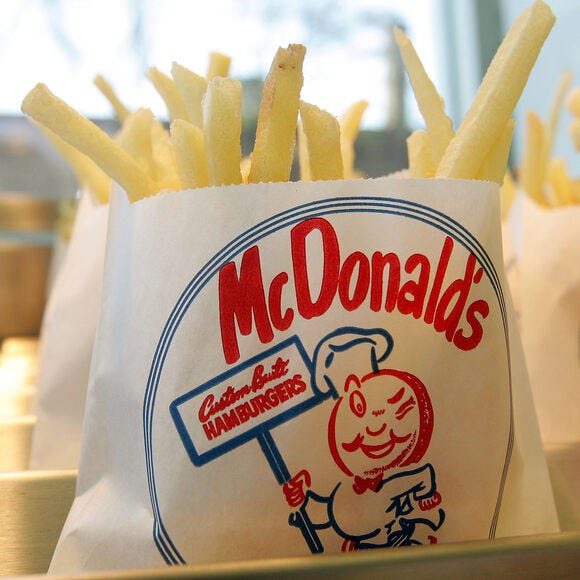
And then there’s the United States, where fries were transformed into a symbol of speed.
Here’s the twist: during World War II, American soldiers stationed in Belgium fell in love with local fried potatoes — thicker, double-fried, lovingly prepared. But since the locals were speaking French, the soldiers called them “French fries.” The name stuck. The place was forgotten.
Back in the States, the fries got thinner. Standardized. Stripped of patience. Mass-produced. Frozen. Dipped in preservatives and rebranded as freedom.
✨ But We Did It Differently
In Calcutta and Rangoon, Singapore and Bombay, the oil still simmered low.
The potatoes still bathed in turmeric.
And on Friday nights, just before the candles were lit, the heat would rise — and Aloo Makalla would arrive.
Hot. Crisp. Golden.
Not French.
Not British.
Not Indian.
Just Jewish. Just ours.
Now yours.
The TikTok way.
📝🍲want the recipe?
🎥 Watch the video here and fry along
🍋 Don’t forget the Amba Mayo
💌 Subscribe to Beyond Babylon for more diaspora dishes — stories that fry, ferment, and travel
And soon, I’ll show you what to do if you’re lucky enough to have Aloo Makalla left over — cold and flaccid — the next day.
Aloo Makalla definitely sounds (and looks) yummy! Parboiling them in salted turmeric water with a pinch of baking soda is genius! In Peru, we parboil potatoes in salted water, cut them into 2-3 thick slices (depending on the size), and then pan-fry them . . . we call these "papas doradas" (golden potatoes). I need to try Aloo Makalla for sure! 😋